
The Largest Wolf Species in the World
4 min read
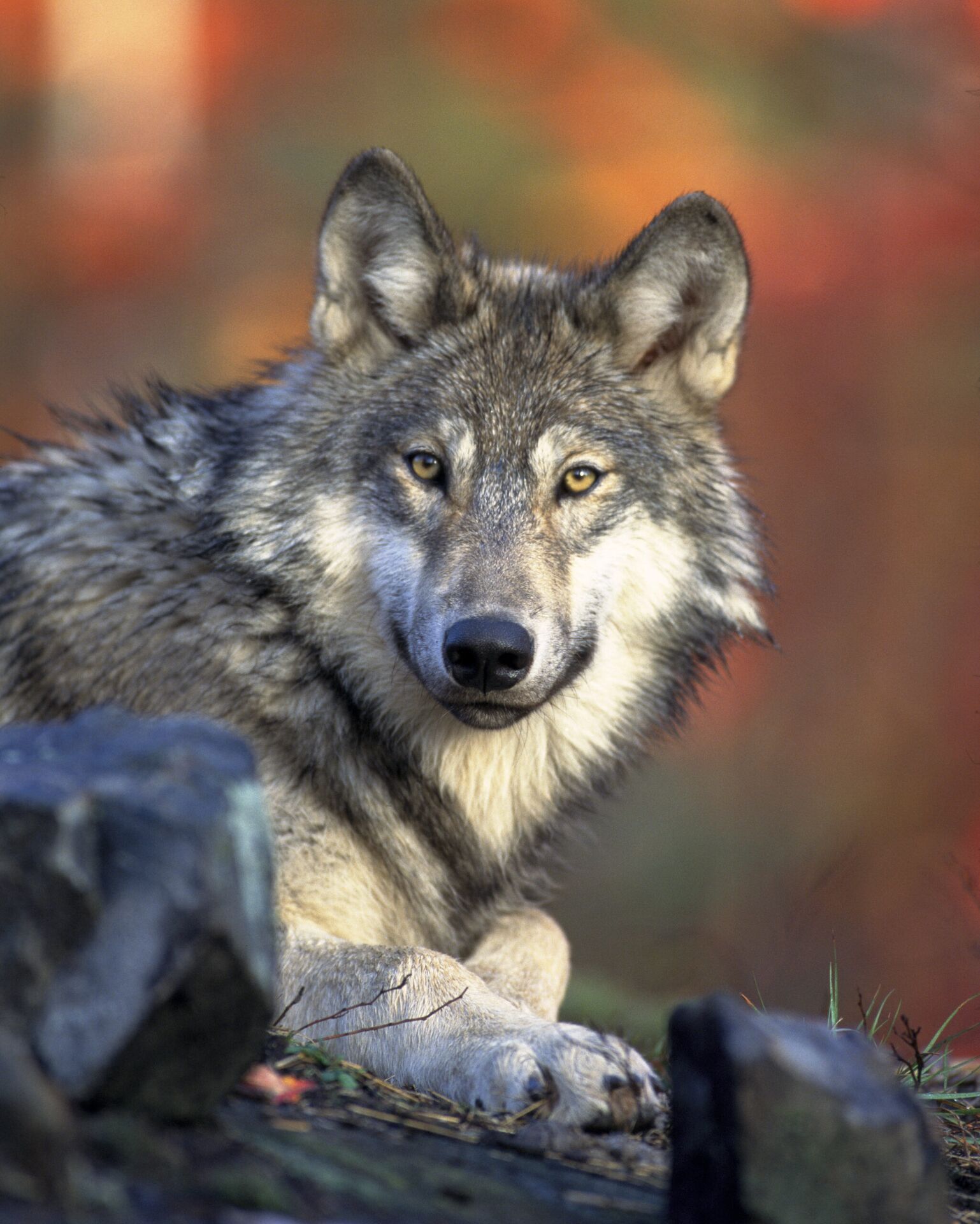
The largest wolf alive is the Northwestern or Mackenzie Valley wolf, Canis lupus occidentalis, of northern Canada and Alaska. Strictly it is not a species but a subspecies of the gray wolf, which is worth saying at the top because the phrase “largest wolf species” produces a lot of confident nonsense.
Part of our guide: Wolf Species.
The numbers that hold up
Across the whole species, mean adult body mass is around 40 kg, with the full documented range running from about 12 kg to 79.4 kg. North American gray wolves average roughly 36 kg. Arabian wolves, at the small end, average around 20 kg, and Indian wolves weigh 18 to 27 kg. The 79.4 kg figure, about 175 lb, is the heaviest reliably documented gray wolf on record, and it is an outlier rather than a typical big male.
For the Northwestern wolf specifically, field studies in British Columbia found adult females averaging around 42.5 kg and males around 51 kg, with the full adult range roughly 39 to 61 kg. Recent studies in the northwestern United States record males from 45 to 72 kg and females from 36 to 60 kg, at shoulder heights of 68 to 91.5 cm. Body length usually runs 1.5 to 1.8 m and can reach about 2.1 m.
Why we are not giving you a ranked subspecies table
This page used to carry one, with a neat maximum weight for each of six subspecies. Most of those maxima could not be traced to a source. Subspecies size figures circulate between websites, get rounded up on each pass, and end up as folklore with a decimal point. What can be said with confidence is this: the biggest wolves are northern wolves, the Eurasian wolf averages around 38.5 kg with exceptionally large males in central Russia reaching 69 to 79 kg, and the Mexican wolf at 23 to 36 kg is the smallest North American subspecies.
Size by region
The 79.4 kg record is a male trapped by Frank Glaser on the Seventymile River in east-central Alaska in 1939. For comparison, adult male wolves in Alaska average around 45 to 50 kg.
Wolves of hot, dry country sit at the other end of the scale. The Arabian wolf averages about 20 kg, and the Indian wolf weighs 18 to 27 kg. They hunt gazelle, blackbuck, hares and livestock, and a big body would cost them heat and water through a desert summer.
Why the big wolves live in the north
Bergmann’s rule. As an animal gets larger its volume grows faster than its surface area, so a big body loses heat more slowly, which pays in a cold climate. Prey reinforces the pattern: moose, caribou and bison are northern animals, and killing them rewards size. The same trend shows up in bears and deer.
The Yellowstone wolves, and where they actually came from
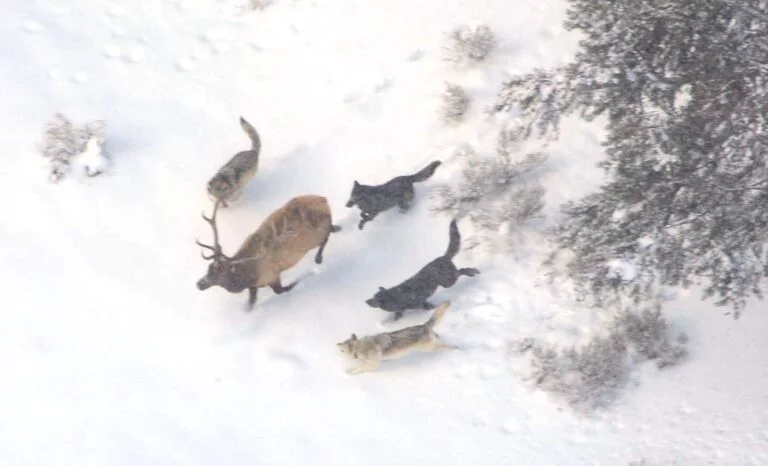
Yellowstone’s wolves are Northwestern stock, and this is the point at which a specific error needs correcting. They were not taken from Jasper National Park. The 1995 cohort of 14 wolves was captured from several packs east of Jasper, near Hinton in Alberta. The 17 wolves that followed in 1996 came from northeastern British Columbia. Thirty-one animals across two winters, from two different regions.
Are they unusually large? Not really. Yellowstone adults average around 40 kg for females and 50 kg for males, with a winter mean of about 46 kg, which is ordinary for the subspecies. They are bigger than the wolves that were shot out of the region a century earlier, and that difference is what feeds the persistent claim that oversized Canadian wolves were introduced. The wolves are normal. The comparison is with a smaller southern population that no longer exists.
The dire wolf, for comparison
The dire wolf, Aenocyon dirus, lived across North America until the end of the Pleistocene. Adults weighed roughly 60 to 70 kg, which puts them alongside a large modern Mackenzie Valley wolf rather than far above one. The difference was construction, not scale: a heavier skull, stronger jaws and a stockier frame suited to horses, camels and ground sloths.
DNA published in 2021 showed dire wolves were not close relatives of gray wolves at all. The lineages split around 5.7 million years ago, which is why the animal was moved into its own genus. A 2025 genome preprint, not yet peer reviewed, argues that about two thirds of dire wolf ancestry comes from a lineage close to gray wolves and coyotes. They shared late Pleistocene North America with gray wolves without interbreeding.
How wolf size gets measured, and inflated
The trustworthy weights come from researchers weighing tranquillised wolves in the field. The enormous ones tend to come from old hunting records, sometimes taken with a full stomach, sometimes taken with an eye on the story. Males run roughly twenty percent heavier than females. If you see a claimed gray wolf much above 80 kg, the burden of proof sits with whoever is claiming it.
Related reading
For wolf fans browsing for something to take home, see the wolf-themed gifts.
Frequently asked questions
What is the largest wolf in the world?
The Northwestern or Mackenzie Valley wolf, Canis lupus occidentalis, of northern Canada and Alaska. Males in recent North American studies run from 45 to 72 kg.
How big can a gray wolf actually get?
The heaviest reliably documented individual weighed 79.4 kg. Average adult body mass across the species is around 40 kg, so the record is roughly double a normal wolf.
Were dire wolves bigger than gray wolves?
Heavier than an average gray wolf, at around 60 to 70 kg, but comparable with the largest modern wolves. They were built heavier rather than larger.
Are the Yellowstone wolves oversized Canadian imports?
No. They average around 46 kg in winter, which is typical for their subspecies. They are larger than the wolves that used to live there, which is a different claim.
What about giant wolves in fantasy stories?
Fiction. Nothing in the wolf lineage, living or extinct, approaches the size of a direwolf on television. The real ceiling is somewhere around 80 kg.
How does a wolf compare with a large dog?
The heaviest working breeds overlap in weight with a big wolf. They do not overlap in build. At the same mass a wolf carries more lean muscle, longer legs and a considerably heavier skull.
Last updated 27 July 2026.
Updated 8 October 2026: corrected the small-wolf weights and the dire wolf size answer, and added the 2025 dire wolf genome preprint; merged our post on the largest wolves by region into this guide.



The 175 pound wolf from Alaska in 1939 is the heaviest well documented one I know of. Bigger claims usually have no good source.
Agreed. Heavy claims without a proper weighing record don’t count for me.
Bergmann’s rule works both ways. That’s why the Mexican wolf is so much smaller.
You don’t get the size until you stand next to one. Much bigger than my malamute, and he’s not small.
Where would the Hudson Bay wolf fit on this list?
The giant Canadian wolf thing still comes up every time someone mentions Yellowstone. They weren’t giants.