
Mexican Wolf: The Near Tragedy of El Lobo and Its Recovery
7 min read
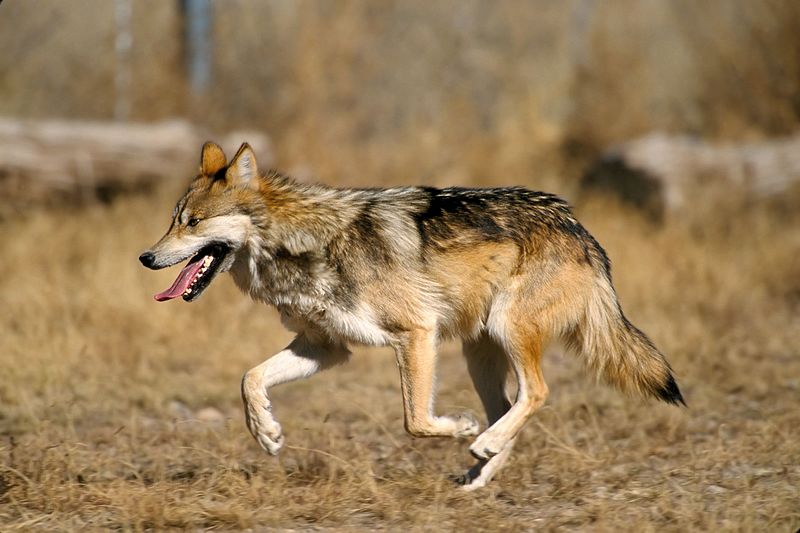
The Mexican wolf, Canis lupus baileyi, is the smallest gray wolf subspecies in North America and the one that came closest to disappearing entirely. Every Mexican wolf alive today, wild or captive, descends from seven founder animals. As of the 2025 count there were at least 319 wild Mexican wolves in the United States, split between New Mexico and Arizona, with an estimated 35 to 40 more in the wild in Mexico.
Key facts at a glance
| Common name | Mexican wolf, El Lobo |
| Scientific name | Canis lupus baileyi |
| Family | Canidae |
| Shoulder height | Roughly 60 to 80 cm |
| Body length | Around 1.7 m |
| Weight | 23 to 36 kg |
| Diet | Elk, white-tailed deer, mule deer, javelina, rabbit, rodents |
| Habitat | Sub-alpine forest, woodland and semi-arid scrub |
| Pack size | Typically four to nine |
| Legal status | Endangered under the US Endangered Species Act |
| Wild population | At least 319 in the US (2025 count), plus an estimated 35 to 40 in Mexico |
The smallest gray wolf in North America
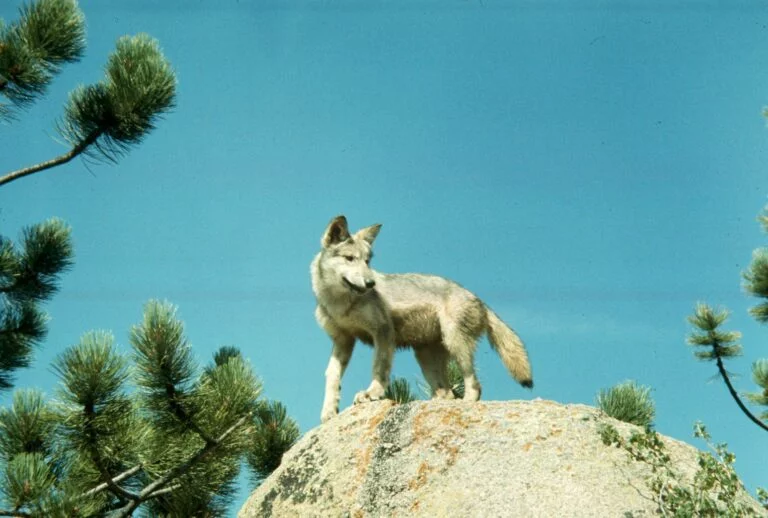
Adults weigh between 23 and 36 kg, with males at the heavier end. The coat mixes buff, grey, rust and black, and the muzzle carries a rich brown that northern wolves do not have. Set one beside a Mackenzie Valley wolf and the difference is obvious: lighter frame, warmer colouring, and roughly half the mass at the top end.
Genomic work treats Canis lupus baileyi as the most genetically distinct of the North American gray wolf subspecies. You will sometimes see a specific divergence date attached to that, running into the hundreds of thousands of years. We have taken it off this page, because we could not stand it up against a published source.
Historic range and the extirpation
Before European colonisation the Mexican wolf ranged across central Mexico, the southwestern United States, and northern Sonora and Chihuahua. From the late nineteenth century it was hunted as a livestock predator, and the federal Animal Damage Control programme, now Wildlife Services, ran a sustained campaign of poisoning, trapping and shooting through the first half of the twentieth century.
The last confirmed wild Mexican wolves in the United States were killed in 1970, including a male shot in Texas on 5 December that year. In Mexico the subspecies held on in fragmented pockets of the Sierra Madre Occidental into the late 1970s, which is where the recovery programme found its founders.
Seven founders
The entire modern population traces to three certified lineages. The McBride line came from five wolves captured in Mexico between 1977 and 1980, four males and a pregnant female; because one of the males was the female’s own offspring, the line counts three founders. The Ghost Ranch and Aragón lines, the latter from a Mexico City zoo, added two founders each when the three lines were merged in 1995. Seven animals in total, which is an extraordinarily narrow base on which to rebuild a subspecies, and the reason inbreeding is still the programme’s central problem rather than a historical footnote.
The three lines were first bred separately and later crossed. Wolves descended from more than one line proved less inbred and bred more successfully than wolves from a single line (Fredrickson and colleagues, 2007), so the programme now manages pairings across the whole studbook.
Captive breeding and reintroduction
The founders went into a Species Survival Plan run by the US Fish and Wildlife Service with Mexican federal wildlife authorities. The captive population grew through the 1980s and 1990s and now stands at 380 wolves across more than 60 facilities, which is an insurance policy and a genetic reservoir at the same time.
The first wild releases went into the Blue Range Wolf Recovery Area of eastern Arizona in 1998. The first decade was rocky, with releases paused more than once under political and livestock-conflict pressure. Growth accelerated once cross-fostering, the practice of slipping captive-born pups into wild dens so that wild parents raise them, was adopted from 2014 onwards. Mexico began its own releases in the Sierra Madre Occidental in 2011 and has since extended them to Durango.
Captive-born pups less than two weeks old are also placed into wild dens with litters of the same age, and the wild parents raise them. The Fish and Wildlife Service placed a record 22 pups this way in 2021, and Defenders of Wildlife reported 27 in 2024.
Where the population stands
The 2025 US count recorded at least 319 wild Mexican wolves, 176 in New Mexico and 143 in Arizona. Mexico holds about 35 to 40 more in the Sierra de Chihuahua, according to Semarnat in August 2025, and a family of four was released in Durango in April 2026. The number has climbed steadily for a decade, which is the good news. The bad news is genetic: every one of those wolves is descended from seven animals, and the resulting inbreeding is not something a bigger population fixes on its own. Cross-fostering with pups carrying under-represented founder bloodlines is the main intervention, and it works, slowly.
Mexican wolf count by year, 1998 to 2025
This table gives the minimum number of wild Mexican wolves counted in the United States at the end of each year since the first releases in 1998, split between Arizona and New Mexico, with the number of breeding pairs. The figures come from the Fish and Wildlife Service population statistics, current to 31 December 2025. Wolves in Mexico are not included.
| Year | Minimum count, US | Arizona | New Mexico | Breeding pairs |
|---|---|---|---|---|
| 1998 | 4 | 4 | 0 | 0 |
| 1999 | 15 | 9 | 6 | 3 |
| 2000 | 22 | 15 | 7 | 1 |
| 2001 | 26 | 21 | 4 | 1 |
| 2002 | 41 | 34 | 7 | 5 |
| 2003 | 55 | 42 | 13 | 3 |
| 2004 | 44 to 48 | 26 | 18 | 6 |
| 2005 | 35 to 49 | 24 | 18 | 5 |
| 2006 | 59 | 25 | 34 | 6 |
| 2007 | 52 | 29 | 23 | 3 |
| 2008 | 52 | 29 | 23 | 2 |
| 2009 | 42 | 27 | 15 | 2 |
| 2010 | 50 | 29 | 21 | 2 |
| 2011 | 67 | 32 | 35 | 7 |
| 2012 | 80 | 37 | 43 | 3 |
| 2013 | 88 | 40 | 48 | 5 |
| 2014 | 112 | 58 | 54 | 9 |
| 2015 | 98 | 50 | 48 | 7 |
| 2016 | 114 | 64 | 50 | 13 |
| 2017 | 117 | 63 | 54 | 12 |
| 2018 | 131 | 64 | 67 | 15 |
| 2019 | 163 | 76 | 87 | 19 |
| 2020 | 186 | 72 | 114 | 20 |
| 2021 | 196 | 84 | 112 | 25 |
| 2022 | 242 | 105 | 137 | 31 |
| 2023 | 257 | 113 | 144 | 26 |
| 2024 | 286 | 124 | 162 | 26 |
| 2025 | 319 | 143 | 176 | 23 (New Mexico only) |
The count fell from 55 in 2003 to 42 in 2009, then rose every year except 2015. Since 2015 it has gone up ten years in a row, from 98 to 319. Each figure is a minimum, gathered by the Interagency Field Team from November to February. A count can change after it is announced. The 2022 count was first announced as 241 and stands at 242 in the current sheet. The 2004 and 2005 totals are published as ranges, and the 2001 state figures add to 25, one fewer than the total. The definition of a breeding pair changed in 2015, so pair numbers before and after that year do not compare directly, and the 2025 pair figure covers New Mexico only. The table is free to download as a CSV.
Diet and pack life
Elk are the main prey in the Arizona core range, supplemented with white-tailed and mule deer, javelina, rabbit and rodents. Livestock make up a small share of recorded prey, mostly calves in spring, which is nonetheless the share that drives the politics. Packs are smaller than northern gray wolf packs, usually four to nine animals, and follow the same structure: a breeding pair and their offspring from the last year or two.
The livestock conflict
Cattle ranching is the dominant land use across most of the range, and confirmed depredations run to tens of head a year against a regional cattle population in the millions. That ratio does not settle the argument, because the losses fall on individual operations rather than on an average. A federal compensation programme pays for verified losses, and the non-lethal toolkit of range riders, fladry, guardian dogs, electric fencing and prompt carcass removal has been shown to reduce them. Uptake is uneven and the political temperature stays high.
Threats and the target
Beyond livestock conflict, the significant threats are illegal shooting, vehicle strikes and the genetic bottleneck. The current recovery criteria call for a stable or growing US population averaging at least 320 wolves over eight years, plus a minimum of 200 in Mexico. The US side is now at the edge of that number for the first time, which makes the next few counts the interesting ones. On 4 September 2026 a presidential executive order gave the Interior Secretary 90 days to decide whether the Mexican wolf qualifies for delisting or downlisting. The order did not itself change the wolf’s status.
Illegal killing is the leading recorded cause of Mexican wolf deaths, according to the Fish and Wildlife Service. The border can block dispersal too. In November 2021 a collared male known as Mr. Goodbar spent five days pacing a 23-mile stretch of the border wall in New Mexico without finding a way through, then turned back north.
Cultural context
El Lobo runs deep in the folklore of Mexico and the southwestern United States, and Apache, Yaqui and Tarahumara traditions treat the wolf as a hunter to be respected rather than vermin. The Spanish colonial and later Mexican agricultural framing was the opposite, and that framing is what underwrote the extermination campaign. The modern imagery is rehabilitative: the wolf turns up on federal agency signage on both sides of the border and in community conservation programmes in Sonora and Chihuahua.
Related reading on welovewolves
- Gray wolf species profile
- Red wolf species profile
- Wolves and livestock conflict
- Non-lethal wolf control
- Wolf tourism worldwide
Sources
- US Fish and Wildlife Service Mexican wolf recovery programme: population statistics, 1998 to 2025
- Mexican Wolf Interagency Field Team annual counts
- CONANP, Mexico
Frequently asked questions
How many Mexican wolves are left?
At least 319 in the wild in the United States as of the 2025 count, with 176 in New Mexico and 143 in Arizona, and an estimated 35 to 40 in Mexico. A further 380 live in captive breeding facilities.
Where do Mexican wolves live?
Eastern Arizona and western New Mexico, and the Sierra Madre Occidental in Sonora, Chihuahua and Durango.
Why is the Mexican wolf endangered?
Federal predator control removed it from the wild in the United States by 1970 and nearly finished it in Mexico. Recovery has been slow because it started with seven founders and has been fought over politically ever since.
How big is a Mexican wolf?
23 to 36 kg, the smallest gray wolf subspecies in North America, with a warmer, redder coat than northern wolves.
Are Mexican wolves dangerous?
There are no documented attacks on people in the modern recovery period. They avoid settled areas and are wary of humans.
Where can I see a Mexican wolf?
Realistically, in captivity. More than 60 facilities hold them, including the Endangered Wolf Center in Missouri, the Wolf Conservation Center in New York, the Phoenix Zoo and the Albuquerque BioPark. Wild sightings are close to impossible.
Last updated 27 July 2026.
Updated 18 November 2026: added the Mexican wolf count by year, 1998 to 2025, with a CSV download, linked the Fish and Wildlife Service statistics in the sources, and sourced the Mexico estimate to Semarnat.
Updated 8 October 2026: corrected the Mexican wild population and the founder breakdown, and added the September 2026 executive order; merged our detailed post on the Mexican wolf recovery into this guide.


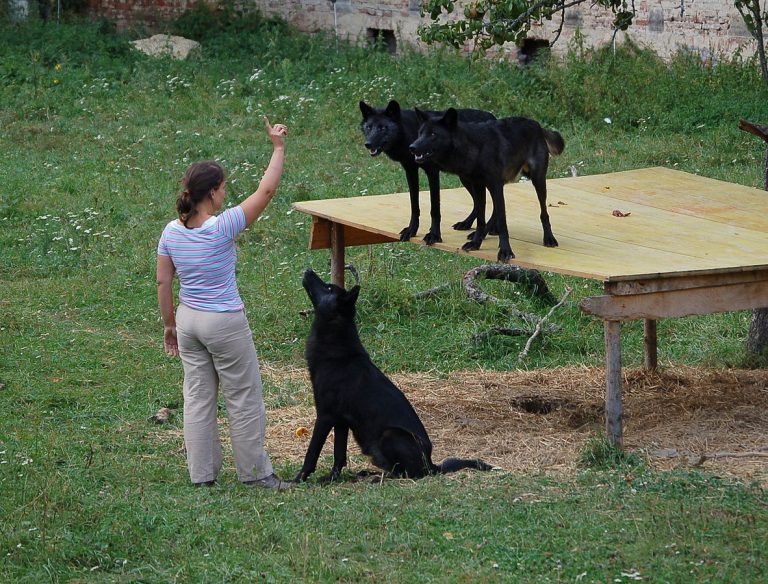


sevilleta in new mexico has one of the captive breeding sites. not open to the public, which is probably right.
The Wolf Conservation Center in New York keeps Mexican wolves too, and you can visit that one.
The whole captive population goes back to just seven founders. Inbreeding will be a worry for a long time.
The politics happen in the cities and the wolves live in the mountains. I suspect that distance explains a lot of the friction.