

Non-Lethal Wolf Control: 5 Strategies That Work
5 min read
Killing wolves to stop them killing livestock is the oldest answer there is, and there is decent evidence that at low intensity it makes the problem worse rather than better. Here is what the research says and what ranchers are using instead.
A brief history of wolf control
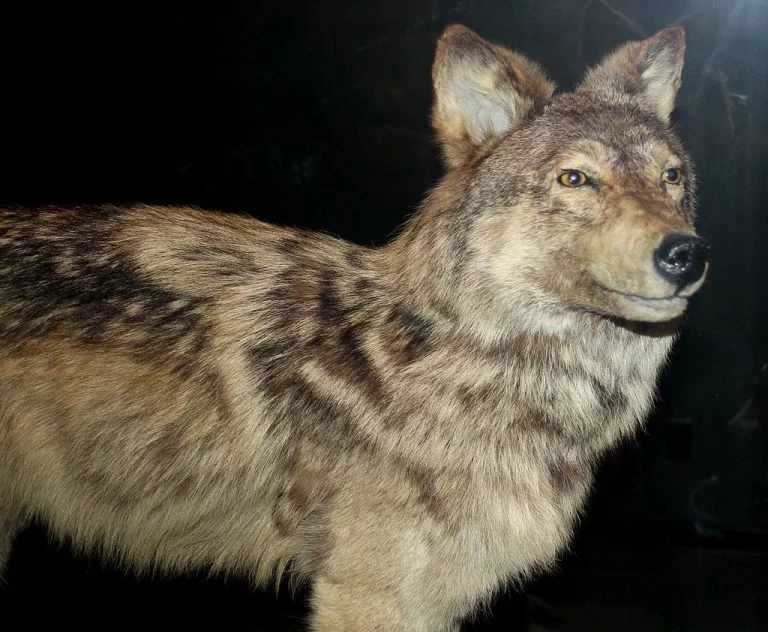
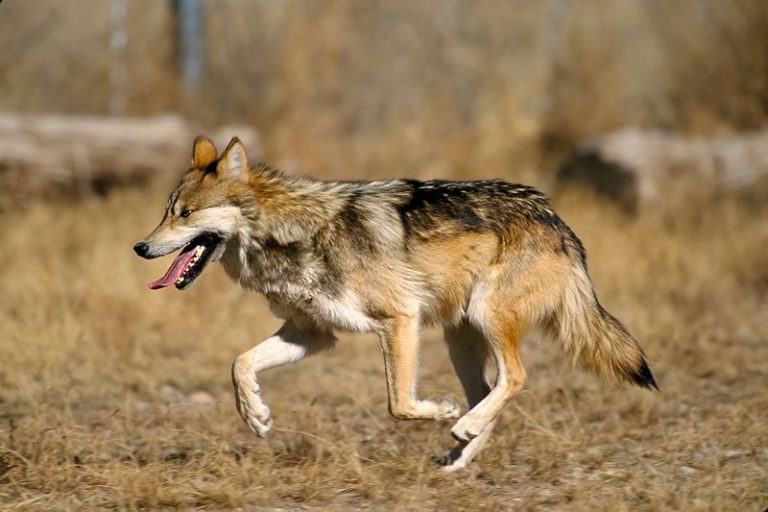
Shooting and trapping wolves has been standard practice in stock-rearing regions for a very long time, and it worked, in the sense that it emptied most of western Europe and the western United States of wolves by the early twentieth century. The gray wolf took the brunt of it, being the largest and the most widely distributed.
Humans have probably been killing wolves for thousands of years, from around the point that Neolithic communities had livestock worth defending. Wolves were hunted for sport, for skins, to protect stock, and to protect people, in roughly that order of frequency depending on where and when you look.
The lethal methods, and why they were laborious
Wolves are difficult to hunt. They are elusive, their senses are excellent, and an adult wolf can outrun most hounds, which is why historical wolf hunts needed horses and, in some regions, entire villages conscripted to beat a line through cover.
- Shooting, including aerial shooting. Hunters track a pack from a light aircraft or helicopter. Still used in parts of Russia and North America, and generally the most effective lethal method available.
- Poisoning. Strychnine was the compound of choice in the American West and in Imperial Japan, and it is what finished off several regional wolf populations outright. Illegal poisoning still happens, as when six gray wolves were poisoned in Washington in 2022.
- Fladry as a hunting tool. In Russia, hunters encircled a pack with rope hung with fabric swatches carrying human scent. Wolves avoided crossing the line and could be shot inside the ring. The same principle now gets used defensively, which is a pleasing reversal.
- Trapping. Pits, knife traps and later steel leg-hold traps.
- Calling. A Mongolian technique: imitate a howl, wait for the answer, wait for the wolf.
- Hounds and eagles. Specialist hunting dogs, and in Central Asia trained golden eagles.
What the Washington State study found
Rob Wielgus, then at Washington State University, has built a career on testing whether predator control does what it claims. His earlier cougar work found that shooting mature adult cougars increased rather than reduced attacks on livestock, because the vacated territory filled with younger animals.
He and a colleague then applied the same question to wolves, using 25 years of data from Idaho, Montana and Wyoming, and published the result in PLOS ONE in 2014. The finding was counterintuitive: for each wolf killed in an area, the odds of livestock depredation the following year went up, by roughly 4 percent for sheep and 5 to 6 percent for cattle. The relationship only reversed once more than about a quarter of the state’s wolves were killed in a single year, at which point losses did start to fall.
Wielgus’s proposed explanation is about pack structure. Kill a breeding wolf and the family can fragment into several smaller groups, each of which may breed. More breeding units, more inexperienced hunters, more small groups near easy prey. The study has been challenged in the literature since publication, and it should be read as one strong piece of evidence rather than a closed case. What it does establish is that the assumption behind casual lethal control, that fewer wolves automatically means fewer dead calves, is not safe.
Five non-lethal strategies that work
1. Remove the attractants first
Wolves are opportunists with an outstanding nose. Dead and dying stock, bone piles and afterbirth all advertise a location. Remove carcasses promptly and dispose of them well away from grazing ground. Defenders of Wildlife’s livestock manual makes the point that afterbirth from calving is a powerful attractant, which is worth factoring into when and where you calve.
2. Barriers
Fladry, a rope strung with hanging flags, is cheap and genuinely deters wolves, at least for a while. The two failure modes are cattle chewing the flags and wolves getting used to them. Turbofladry, which adds electrified wire to the same design, holds up considerably longer. Neither is realistic across a large open range, so barriers work best around calving pastures and night pens rather than as a perimeter for everything you own.
3. Scare devices
Air horns, starter pistols, high-powered torches, motion-triggered lighting and non-lethal ammunition such as paintballs all have a place. So do radio-activated guard boxes, which trigger noise and light when a collared wolf comes within range, with the obvious limitation that they only respond to collared animals. In Japan, farmers use robot wolves to scare bears and boar off their land. Non-lethal ammunition can cause serious injury if used badly and may need a permit, so check before you buy and train before you use it.
4. Human presence and guard dogs
The most reliable deterrent is a person. Range riders, increased patrols at dawn and dusk, and livestock guardian dogs all measurably reduce losses. This is also the most expensive option, because it is labour, and labour on horseback at unsociable hours. Several western states now part-fund range rider programmes for exactly this reason.
5. Reassess constantly
Wolves habituate to everything eventually. A deterrent that worked last season may be furniture by this one. Rotate methods, and pay particular attention around calving and lambing, when the herd is at its most attractive and least mobile.
What the critics say
Conservation groups took the Washington State findings as confirmation that shooting wolves is futile. Livestock industry organisations disputed both the analysis and its practical relevance, and the position of many producers is straightforward: wolves get into stock, we remove the wolves, and it works well enough for us. That disagreement has not narrowed much.
It is worth keeping the actual scale in view. Confirmed wolf depredation accounts for a small fraction of total livestock mortality in every western state, well behind disease and weather. That statistic is also completely useless to a rancher who has just lost a calf, which is why the argument is about far more than arithmetic.
Read more in our complete guide: Wolf Conservation: Where We Are and What is Working.
How good is the evidence?
Thinner than the confident percentages suggest, and it is worth saying so plainly. Eklund and colleagues reviewed the literature from 1990 to 2016 in Scientific Reports and found that only 21 studies, 3.7 percent of the publications they screened, used a case-control design strong enough to show whether an intervention actually worked. The methods they could assess that way were changing livestock type, keeping animals in enclosures, guarding and livestock guarding dogs, predator removal, and shock collars.
That is not a verdict against the strategies above. Most of them are still the best options a farmer has. It does mean that any single figure claiming a precise reduction, of the kind that gets repeated across conservation sites including this one in the past, usually traces back to work with no control group. Where you see one, ask what it is measured against.
Source: Eklund A, Lopez-Bao JV, Tourani M, Chapron G, Frank J (2017), Limited evidence on the effectiveness of interventions to reduce livestock predation by large carnivores, Scientific Reports 7:2097.
Bring wolves home
Browse our wolf merchandise store for gear inspired by these animals.
Updated 8 October 2026: corrected when and where wolves were wiped out.



fladry works for a while but wolves get used to it. mixing tools seems to be the key.
compensation helps people accept wolves. it doesn’t stop losses on its own though.
karelian bear dogs are great but they need proper training. you can’t just put one in with the sheep and hope.
Agreed. Most failures I’ve heard about come down to how the tools were used.