The Myth of the Big Bad Wolf: Where It Came From
3 min read
The Big Bad Wolf is younger than it looks. The fairy tale villain most of Europe grew up with was fixed in place by writers working in the seventeenth and nineteenth centuries, and it reached peak cultural power at almost exactly the moment the real animal was being cleared out of the continent.
Part of our guide: Wolves in Culture.
The fear underneath it
Start with the material fact, because the folklore did not come out of nowhere. European peasant households ran on small flocks, and a small flock is a household’s savings account. A wolf raid was not an inconvenience, it was a year of work removed overnight.
Out of that came a body of oral tradition in which the wolf is a thief, a trickster and sometimes a demon. It was practical fear before it was symbolic fear, and it was fear about property rather than about being eaten.
Perrault and the Grimms
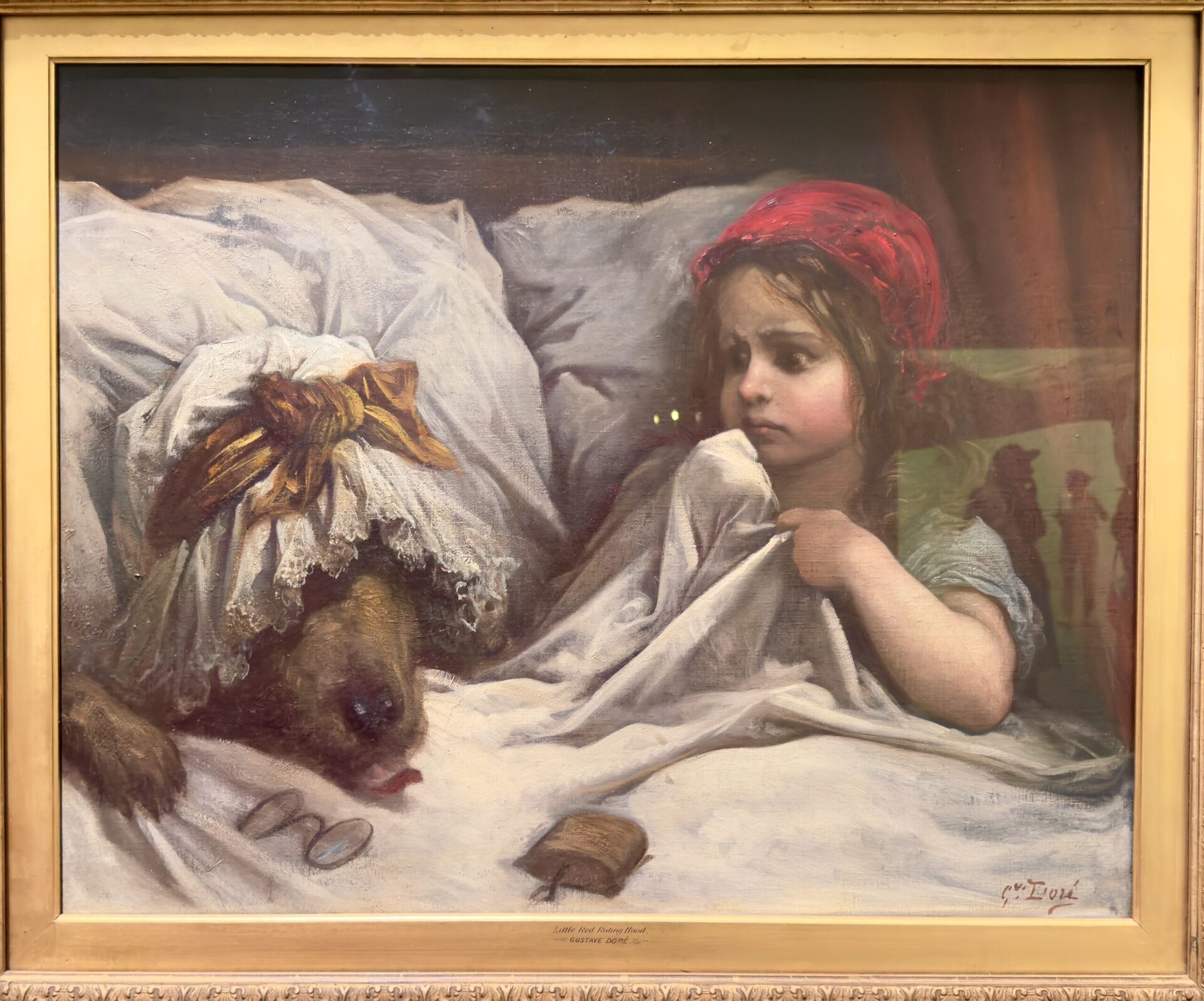
Charles Perrault published Le Petit Chaperon Rouge in 1697, and his version has no rescue in it. The wolf eats the grandmother, then eats the girl, and the story stops there with a moral about young women and strangers.
The Brothers Grimm added a rescuing huntsman in 1812, which changed the shape of the story completely. Once the wolf can be cut open and defeated, it stops being a warning about the world and becomes an antagonist to be beaten, which is the version that survives.
The Three Little Pigs reached print in the 1840s, and Joseph Jacobs’s 1890 English Fairy Tales made the huffing and puffing version standard. Note what the wolf has become by then: a creature you defeat with better building materials. That is a domesticated threat.
Disney and the timing problem
Disney’s 1933 Three Little Pigs put a single visual design of the Big Bad Wolf into millions of heads at once, and from there it spread through cinema, children’s publishing and advertising until it was the default picture of a wolf.
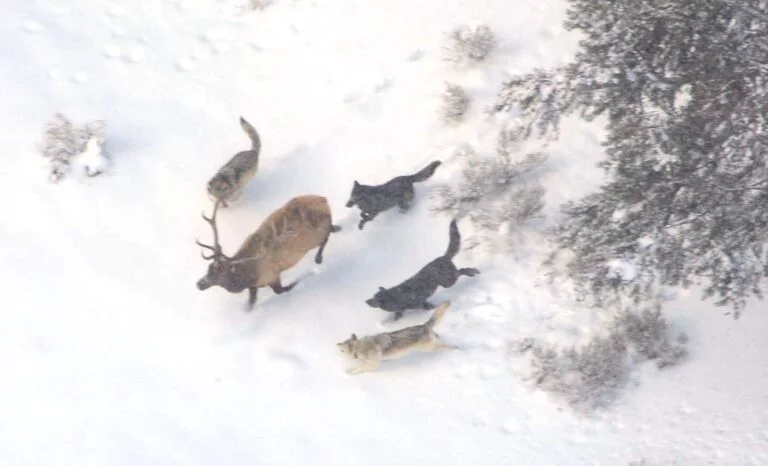
Here is the awkward chronology. Across most of Western Europe the actual animal was gone between roughly 1850 and 1950. The cartoon peaked after the animal had left. Two or three generations of Europeans formed their entire idea of what a wolf is from a drawing, with no possibility of ever meeting one, and that is where most of the surviving misconceptions were laid down.
Not a universal villain
The Big Bad Wolf is a specific cultural product, not a human default. Native American, Mongolian and various Asian traditions never adopted anything like it, and in those traditions the wolf turns up as kin, as teacher, or as a model for a warrior.
The European pastoral version has also aged unevenly at home. Rural attitudes still carry a good deal of it, urban attitudes have moved in the opposite direction, and that split is now one of the defining features of European wolf politics. When a national parliament argues about culling, the fairy tale is somewhere in the room.
Related reading
Frequently asked questions
Were wolves really a major threat in medieval Europe?
To livestock, yes, and that was threat enough for a household living on a handful of sheep. To people directly, much less than the folklore implies, and the documented historical attacks are heavily concentrated in the era before rabies was eliminated.
Is The Three Little Pigs based on a true story?
No. It is a folk tale of unclear origin, first printed in the 1840s.
Did the original Little Red Riding Hood have a happy ending?
No. In Perrault’s 1697 version the wolf wins. The rescuing huntsman is a Grimm addition from 1812; the woodcutter came later, in English retellings.
Updated 8 October 2026: corrected the Grimms’ rescuer to a huntsman and Joseph Jacobs’s part in The Three Little Pigs.