

Wolves vs Coyotes: How to Tell Them Apart
4 min read
Wolves and coyotes are separate species in the same genus, and in the field the difference is mostly a matter of scale. In Yellowstone an adult male gray wolf averages about 50 kg and a female about 41 kg. A coyote weighs 7 to 20 kg. Everything else follows from that.
Size and build
Size is the quickest tell. A wolf stands 70 to 85 cm at the shoulder, a coyote 50 to 60 cm. Male coyotes average 8 to 20 kg and females 7 to 18 kg, with the heaviest specimen on record at 34 kg. Put simply, a wolf is Great Dane sized and a coyote is Border Collie sized.
Build differs as much as mass. Wolves are heavy through the chest with thick legs and broad feet. Coyotes are light boned and narrow. Wolf tracks run 10 to 13 cm long against 5 to 8 cm for a coyote, which settles most arguments in snow or mud without needing to see the animal at all.
Face and ears
A wolf muzzle is blocky and broad, a coyote’s is narrow and pointed. Wolf ears look short and rounded against the head, coyote ears look too big for the face. In profile the coyote reads as fox like and the wolf as bear like.
Coat colour overlaps and is the least reliable clue. Coyotes tend to be grizzled brown grey with rusty legs and ears. Wolves cover a much wider range from white through grey to near black, and black wolves are common in parts of North America while black coyotes are rare.
Behaviour and pack size
Wolves live in family packs, hold large territories and hunt hoofed prey cooperatively. Coyotes live alone, in pairs or in small family groups, hold much smaller territories, and mostly hunt small prey by themselves. The large prey against small prey divide explains nearly every behavioural difference between the two.
They sound completely different too. Coyote calls are high, fast and yip heavy, with overlapping voices that make three animals sound like fifteen. Wolf howls are lower and much longer.
Where the ranges overlap
Across much of North America both species occur, and where they do, wolves dominate. Coyote numbers on the Yellowstone northern range fell sharply in the years after wolves returned, largely because wolves kill coyotes on sight and carcasses are where the two meet. Surviving coyotes shifted into the gaps between wolf territories.
The two also interbreed, which is where the eastern coyote comes from. A 2014 genetic study by Monzón, Kays and Dykhuizen put the average northeastern coyote at 62 percent western coyote, 14 percent western wolf, 13 percent eastern wolf and 11 percent domestic dog. These animals are noticeably heavier than western coyotes, and they now occupy former wolf range from Pennsylvania to Maine. Coywolf is a useful nickname and a poor description: there is more coyote in there than anything else.
The National Park Service puts the fall in coyote numbers on the Yellowstone northern range at as much as 50 percent, through competition for food, direct attacks and lost territory. Across the wider park, Berger and Gese (2007) measured coyote densities 39 percent lower after the reintroduction. Wolves killed few resident coyotes, but they caused 56 percent of deaths among transient coyotes, the young animals that hold no territory.
Why coyotes spread as wolves declined
Coyotes were originally an animal of western plains and deserts. As wolves were eliminated from the eastern United States through the nineteenth century, coyotes moved into the vacancy, hybridising with wolves along the way. The hybrids were first noticed in the northeast between the early 1930s and the late 1940s, and the spread has continued since, into Florida and into city parks including New York’s.
Where wolves come back, coyote numbers fall again, and the knock on effects run down the food chain: more red foxes, because there are fewer coyotes to suppress them, and shifts in the small mammal community underneath both.
The coyote came through the campaigns that removed the wolf because it needs so little. It eats voles, rabbits, fawns, carrion, fruit and rubbish, breeds fast, and can live alone or in a pair. Forest clearance then opened new country to an animal of open ground: by 2015, camera traps showed coyotes across most of the farmland of eastern Panama west of Lago Bayano, close to the Darién.
The places to watch now are where wolves are moving back into country coyotes have held alone for generations: the western Great Lakes, the northern Rockies, and western Colorado since the Colorado wolf reintroduction began in December 2023.
Frequently asked questions
How can you tell a wolf from a coyote?
By size first. Yellowstone wolves average about 41 to 50 kg, coyotes weigh 7 to 20 kg. Then by head shape: wolves have broad muzzles and short rounded ears, coyotes have pointed muzzles and tall ears.
Are wolves and coyotes the same species?
No. Canis lupus and Canis latrans are separate species in the same genus. The two can still interbreed: eastern coyotes carry gray wolf ancestry, and coyotes also hybridise with eastern wolves and red wolves.
Do wolves kill coyotes?
Yes, regularly, and usually at carcasses. Coyote numbers dropped substantially on the Yellowstone northern range after wolves were reintroduced.
What is a coywolf?
The eastern coyote of the northeastern United States and southeastern Canada. Genetically it averages 62 percent western coyote, 14 percent western wolf, 13 percent eastern wolf and 11 percent dog.
Are coyotes dangerous to humans?
Rarely. Bites happen, mostly involving habituated urban animals, and two human deaths have been recorded in North America. Feeding coyotes, deliberately or by leaving food out, is what turns a wary animal into a bold one.
Where do coyotes live in the US?
Every state except Hawaii, so 49 of the 50, including Alaska. They live in Los Angeles, Chicago and New York as well as across the plains and deserts they started from, and they have since spread south through Central America into Panama.
Do coyotes howl like wolves?
No. Coyote calls are higher, faster and full of yips, and a small group sounds like a crowd. Wolf howls are low and sustained.
Updated 8 October 2026: corrected the wolf weight figures, removed an unsourced pack size and coyote weight, and fixed an FAQ answer that said gray wolves and coyotes do not interbreed; merged our post on how wolves and coyotes share ground into this guide.

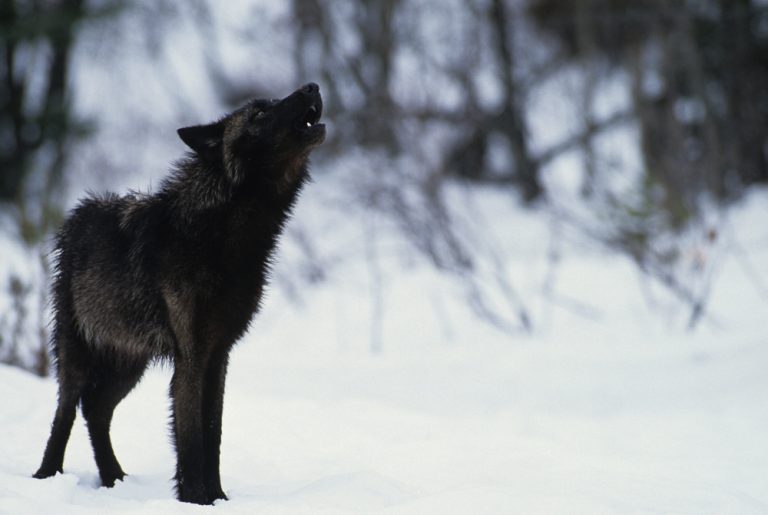


Coyote ears look big partly because the head is so narrow. From the side the difference is smaller.
Track size is the easiest giveaway for me. A coyote print fits in my palm.
Had what I think was a wolf on my trail camera in the UP for a few seconds. The chest depth gave it away.
what part of the UP? im near Marquette and i have not been able to confirm one on my cams in 4 years of trying.
didn’t know coyotes only got to maine in the 1930s. that’s recent.
wolves killing coyotes at carcasses is something i didn’t know about. rough life for a coyote in yellowstone.