
Howl of the West: A Northwestern Wolf Trivia Challenge
4 min read
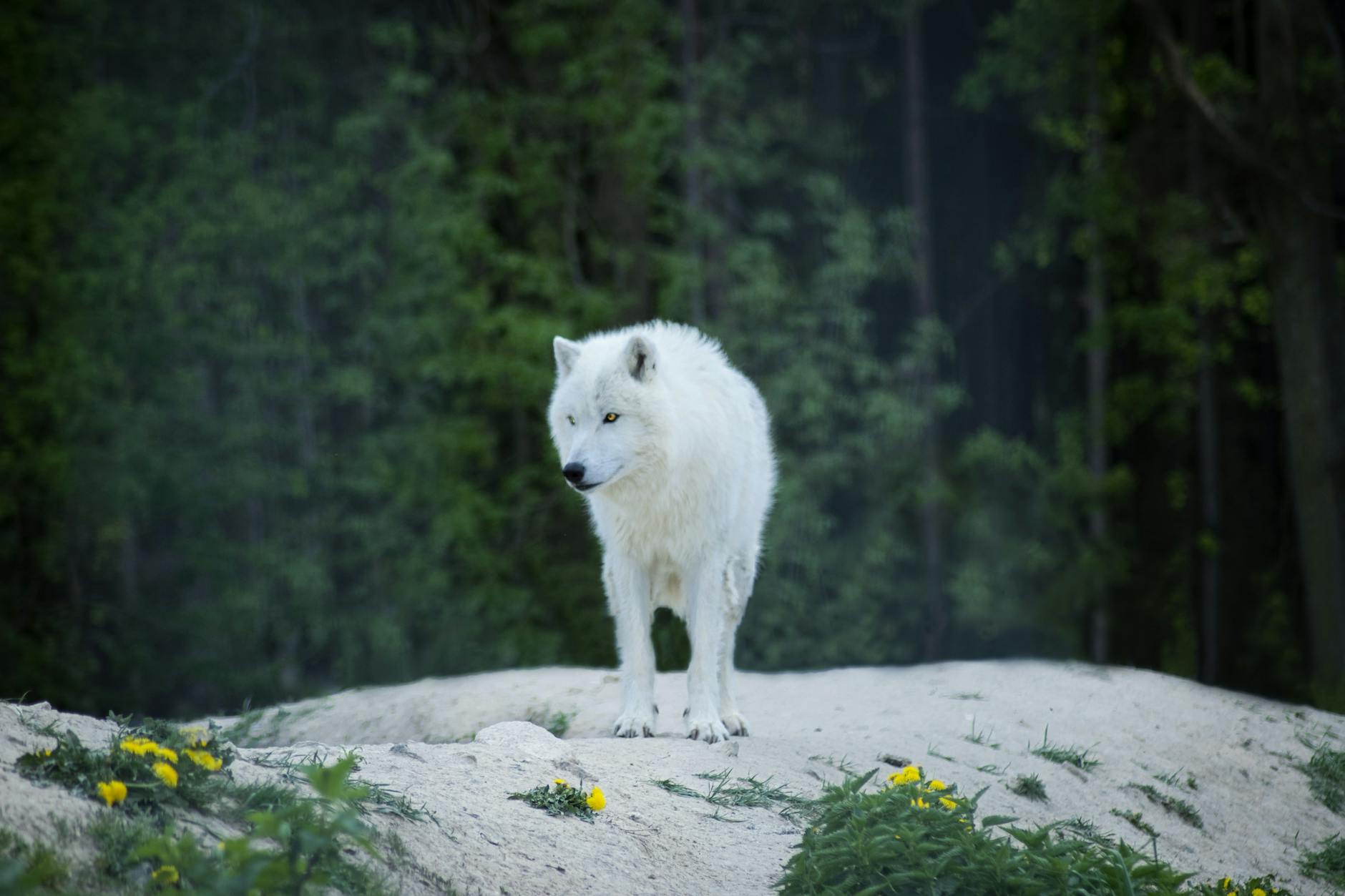
The northwestern wolf is the heavyweight of the wolf world. Also called the Mackenzie Valley wolf and known to science as Canis lupus occidentalis, it is the largest living subspecies of the gray wolf, and it is the animal that ranges across Alaska, the Yukon and the spine of the Canadian Rockies. This challenge has 12 questions, and the notes below will arm you for all of them.
If you have ever read about the Yellowstone reintroduction, you have already met this wolf. The animals released in 1995 and 1996 were captured in Alberta and British Columbia, so the famous Yellowstone packs trace directly back to northwestern wolf stock.
The largest gray wolf subspecies
Size is the first thing to know. Males typically weigh between 85 and 155 pounds, females somewhat less, and large individuals stand around 33 to 36 inches at the shoulder. That bulk is not decoration. It is an adaptation to the prey these wolves pursue and the cold, open country they cross.
A wolf that routinely takes on moose needs both power and endurance, and a larger body conserves heat more efficiently in a northern winter. Coat colour spans the full gray wolf range, from near-white through grizzled gray to black, with black coats notably common in some western populations.
Range across the northwest
The northwestern wolf occupies a vast sweep of western and northern North America: Alaska, the Yukon, the Northwest Territories, British Columbia, Alberta, and into Montana, Idaho and Wyoming following reintroduction and natural spread.
Within that range it is a true habitat generalist. The same subspecies lives in:
- Boreal and montane forest of the interior.
- Alpine and arctic tundra in the far north.
- Open grasslands and river valleys.
- The temperate rainforest of coastal British Columbia, where some wolves swim between islands and eat salmon and shellfish.
A hunter built for big prey
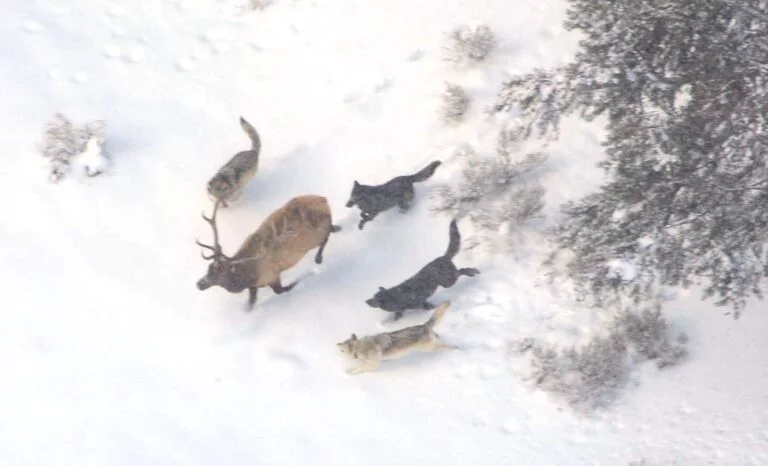
Northwestern wolves specialise in large ungulates: moose, elk, caribou, deer, and bison where the two overlap. Taking down a moose that outweighs a wolf several times over is dangerous work, which is exactly why pack cooperation matters. Wolves test a herd, single out an animal that is old, young or weakened, and wear it down over distance rather than relying on a single ambush.
When large prey is scarce they turn to beaver, hares, smaller mammals, birds and carrion. In Yellowstone, the return of these wolves was followed by changes in elk numbers and elk behaviour, and by willow and aspen recovery along some streams. The size of that effect is argued over by ecologists; that something changed is not.
Pack life
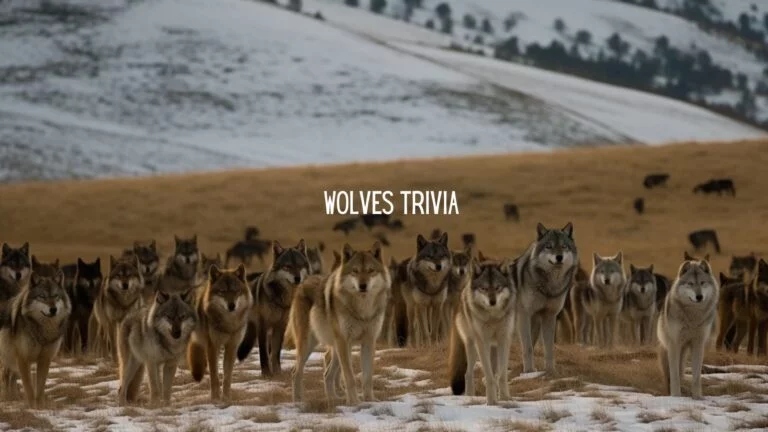
Packs usually number 6 to 12 animals, and in prey-rich areas they can grow considerably larger. A pack is a family: a breeding pair plus their pups and offspring from earlier years. The old alpha vocabulary, which implied a leader who fought its way to the top, no longer matches what field researchers observe. The breeding pair lead because the rest of the pack are their children.
Vocalisations, body language, facial expression and scent hold the family together. The long howl, the sound this challenge is named for, carries for miles, rallies the pack, coordinates movement and warns rival packs off a territory.
Conservation: secure overall, contested locally
As a subspecies the northwestern wolf is not considered endangered, with large populations across Alaska and northern Canada. But secure overall hides a sharply divided picture on the ground. In the northern Rocky Mountain states wolves have been delisted and are managed through state hunting and trapping seasons, and the harvest rules in Idaho and Montana have drawn repeated legal challenge. In parts of British Columbia, government wolf culls have been carried out in the name of protecting endangered mountain caribou.
So the honest answer to how the northwestern wolf is doing depends entirely on which side of which border you are standing on. To see how that fits the wider picture, read our overview of wolf conservation and what is working.
Take the challenge
Twelve questions, each with the answer underneath. Test yourself before reading on.
Question 1: What is the scientific name of the northwestern wolf?
Answer: Canis lupus occidentalis
Question 2: Where is it primarily found?
Answer: Western North America, including Alaska, western Canada and the northwestern United States.
Question 3: What is the typical weight range of a male?
Answer: 85 to 155 pounds.
Question 4: What are the main prey items?
Answer: Large ungulates: moose, elk, caribou and deer.
Question 5: How do they communicate within the pack?
Answer: Vocalisations, body language, facial expression and scent.
Question 6: What ecosystems do they inhabit?
Answer: Boreal and montane forest, alpine and arctic tundra, grassland, and coastal temperate rainforest.
Question 7: What are the main threats?
Answer: State-managed hunting and trapping, government culls in some regions, habitat fragmentation, and conflict with livestock owners.
Question 8: How large is a typical pack?
Answer: Usually 6 to 12, larger where prey is abundant.
Question 9: Who breeds in a pack, and why?
Answer: The breeding pair, who are the parents of the other members. The pack is a family, not a hierarchy.
Question 10: What is its conservation status?
Answer: Not endangered as a subspecies, but managed very differently on either side of the Canada and United States border.
Question 11: Which famous reintroduction used northwestern wolves?
Answer: Yellowstone, in 1995 and 1996, using animals captured in Alberta and British Columbia.
Question 12: What is another common name for it?
Answer: The Mackenzie Valley wolf.
Bring wolves home
Love what you read? Browse our wolf merchandise store for gear inspired by these incredible animals:
- Shop wolf books
- Shop wolf mugs



That top weight must be a very big male. The average is a fair bit lower, isn’t it?
The Yellowstone wolves came from Canada in the 1990s. People called them giant Canadian wolves, but they weren’t unusual for northern wolves.
moose are huge. hard to imagine a pack taking down a healthy adult bull.