

Wild Wisdom: A Eurasian Wolf Trivia Game
3 min read
The Eurasian wolf, Canis lupus lupus, is the wolf of the Old World, running from the forests of western Europe all the way to the Russian Far East. It is the most widely distributed subspecies of the gray wolf and one of the largest. Ten questions wait at the bottom of this page; the field guide comes first so the answers stick.
What makes the Eurasian wolf distinct
It is the nominate subspecies, which is why the three-part name simply repeats the species word: lupus lupus. Regional names abound, including common wolf, European wolf, Carpathian wolf and steppe wolf. Compared with North American gray wolves it tends toward shorter, denser fur and a slightly more elongated skull, with enormous variation across a range this size.
Physical characteristics
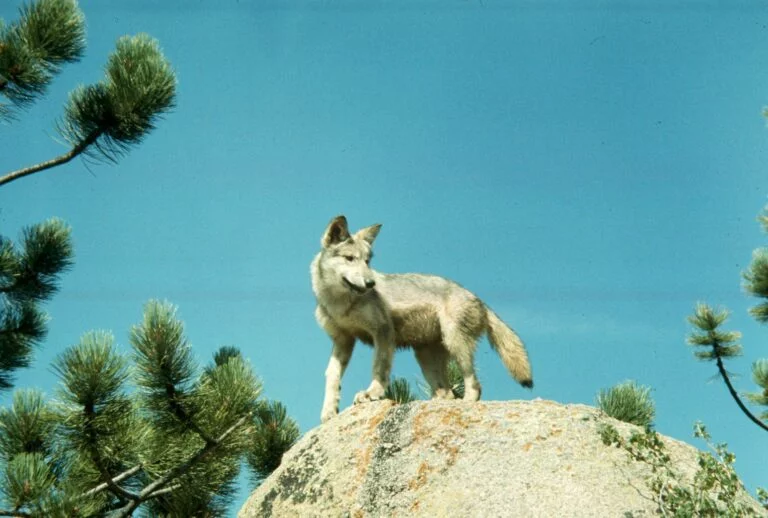
Adults stand roughly 70 to 85 centimetres at the shoulder and measure around 5 to 6 feet from nose to tail tip. Weight is usually 70 to 130 pounds, about 32 to 59 kilograms, with wolves in the colder north and east running heavier than the smaller animals of southern Europe. The coat is never a single colour: grey, brown, ochre, cream and rust blend together, often with a darker saddle across the back, and it thickens dramatically for winter.
Habitat
The subspecies covers boreal forest, temperate woodland, open steppe, alpine meadow and tundra. Significant populations live in Russia, the Romanian Carpathians, the forests of Poland and the Baltic states, parts of Scandinavia, the Balkans, Iberia, Italy, and east into Mongolia and China. That adaptability is precisely why it holds more ground than any other wolf.
Diet
Red deer, roe deer, wild boar, moose and reindeer are the staples, with the mix depending entirely on what the region offers. When large prey thins out they take hares, beavers, rodents and carrion, and near settlements they scavenge and occasionally kill livestock.
Behaviour
Like all gray wolves, the Eurasian wolf lives in a family pack: a breeding pair and their offspring from one or more years. European packs are often small, sometimes just 3 to 6 animals, partly because human pressure keeps numbers down. Young wolves disperse to find territory and a mate, and a dispersing Eurasian wolf can cross hundreds of kilometres of farmland and motorway. That is how wolves recolonised Germany, France and the Netherlands.
Communication runs on three channels. Howls carry for kilometres and help a scattered pack regroup while warning rivals off. Scent marks along boundaries let neighbouring packs avoid each other entirely. Posture and expression handle everything inside the family.
Conservation status
The Eurasian wolf was hunted out of most of western Europe by the early twentieth century, surviving in the east and in remote mountain country. Legal protection since the 1970s, notably the Bern Convention and EU habitats legislation, allowed it to spread back west. That protection has since been loosened: the Bern Convention moved the wolf from strictly protected to protected in December 2024, in force from March 2025, and the EU moved it to Annex V of the Habitats Directive in 2025. The gray wolf is listed as Least Concern globally by the IUCN because of the species’ huge total range, which tells you very little about any individual European population: many remain small, fragmented and vulnerable, and conflict with livestock farmers is the central management problem wherever wolves return.
Eurasian wolf trivia
Question 1: What is the scientific name of the Eurasian wolf?
Answer: Canis lupus lupus
Question 2: Which continents does it cover?
Answer: Europe and Asia.
Question 3: What is the typical weight range of an adult?
Answer: 70 to 130 pounds.
Question 4: What ecosystems does it inhabit?
Answer: Boreal forest, temperate woodland, steppe, alpine meadow and tundra.
Question 5: What is its primary diet?
Answer: Large hoofed prey: red deer, roe deer, wild boar, moose and reindeer.
Question 6: How do Eurasian wolves communicate?
Answer: Vocalisations, body language and scent marking.
Question 7: What is the typical pack structure?
Answer: A breeding pair and their offspring, often just 3 to 6 animals in Europe.
Question 8: Why do they come into conflict with people?
Answer: Livestock predation, particularly sheep, in landscapes where flocks are unguarded.
Question 9: What are the main threats?
Answer: Illegal killing, habitat fragmentation and conflict with livestock farming.
Question 10: How far can a young wolf disperse?
Answer: Hundreds of kilometres, across farmland and motorways, which is how wolves reached Germany, France and the Netherlands again.
How did you score?
Six or more and you have a solid grasp of Canis lupus lupus. If you want to keep going, the rest of our trivia set covers other subspecies, each a different animal with its own range, size and survival tricks.
Bring wolves home
Love what you read? Browse our wolf merchandise store for gear inspired by these incredible animals:
- Shop wolf books
- Shop wolf mugs
More wolf trivia
- Alexander Archipelago Wolf Trivia
- Eastern Wolf Trivia Game
- Arctic Wolf Trivia Game
- Northwestern Wolf Trivia
- Indian Wolf Trivia
Updated 8 October 2026: added the 2024 and 2025 downgrades of the wolf’s protection under the Bern Convention and the EU Habitats Directive.



wild boar numbers are up all over central europe. no surprise wolves are eating more of them.
In parts of Italy boar seems to be the main prey now.
Big size range for one subspecies. I’d guess it depends a lot on where they live.
Bialowieza is worth the trip. Bison, deer, boar and wolves in one forest. Actually seeing a wolf is another matter.