
The Eastern Wolf Quiz: How Well Do You Know This Mysterious Predator?
5 min read
How well do you really know the eastern wolf? This quiz has 12 questions, but before you test yourself it helps to know what you are dealing with, because the eastern wolf is one of the most argued-over animals in North America. It is smaller than a gray wolf, larger than a coyote, and scientists still cannot fully agree on what it is. That uncertainty is the whole story.
The eastern wolf, sometimes written as Canis lupus lycaon and increasingly as the separate species Canis lycaon, is also called the eastern timber wolf or the Algonquin wolf. It lives in the mixed forests of southeastern Canada and the Great Lakes region, and its stronghold is one specific protected area. Work through the background below, then scroll down to the questions and the trivia gallery.
A wolf scientists cannot agree on
The biggest puzzle with the eastern wolf is its identity. For decades it was treated as a subspecies of the gray wolf. Genetic studies have since pulled that apart. Some research finds the eastern wolf is closer to the red wolf (Canis rufus) and the coyote (Canis latrans) than to the gray wolf. Other studies argue it is the product of ancient and recent interbreeding between gray wolves and coyotes. Mitochondrial work by Wilson and colleagues (2000) dated the split between the eastern wolf and coyote lines to roughly 150,000 to 300,000 years ago, and their split from the gray wolf line to 1 to 2 million years ago.
The practical result is that you will see the eastern wolf listed three different ways depending on the source: a gray wolf subspecies, a form of red wolf, or a full species in its own right. This is not a trivial label dispute. Whether an animal counts as its own species changes how it is protected by law, which is why this debate has real conservation stakes.
Where the eastern wolf lives
Eastern wolves occupy mixed deciduous and coniferous forest across south-central Ontario and south-central Quebec, with historical range reaching into the Great Lakes states. Their core population is in Algonquin Provincial Park in Ontario. The park is not an isolated island of wolves: genetic work shows park animals connect with wolves to the north and west, forming the southern edge of a larger metapopulation.
Just south of Algonquin’s boundary, the picture blurs again. That zone is home to the eastern coyote, sometimes called the Tweed wolf, a hybrid of the western coyote and the eastern wolf. The eastern wolf does not live in tidy borders, and that is part of why it is so hard to count and classify.
Size, appearance and diet
Physically, the eastern wolf sits between its larger and smaller cousins. Adults typically weigh between roughly 50 and 70 pounds, noticeably lighter than a northwestern gray wolf and heavier than a coyote. Coat colour runs through tan, brown, and grey, often with reddish tones behind the ears, and the eyes are usually a yellow or amber shade.
Its primary prey is the white-tailed deer. When deer are scarce or seasonally hard to reach, eastern wolves switch to beaver and smaller mammals such as snowshoe hare and rodents, and they will scavenge moose carcasses. This flexible, deer-focused diet ties their fortunes closely to the health of the forest understory the deer depend on.
Pack life and communication
Eastern wolves live in small, close family packs built around a breeding pair and their offspring from one or more years. The pack hunts together, defends a shared territory, and raises pups cooperatively, with older siblings often helping to feed and guard the young at the den.
Communication runs on three channels: vocalisations including the howl, body language such as posture and tail position, and scent marking that signals territory boundaries to neighbouring packs. Howling is also how researchers locate packs, and public “howl nights” in Algonquin Park have become a way for visitors to hear wild eastern wolves answer back.
Why the eastern wolf is threatened
The eastern wolf is assessed as threatened. Its population is small, likely fewer than 1,000 mature individuals, and its range is restricted. Three pressures stand out:
- Habitat loss and roads. Forest fragmentation reduces territory and raises the risk of vehicle collisions.
- Hunting and trapping. Animals that leave protected areas can be legally killed in some surrounding zones, and eastern wolves are easily mistaken for coyotes.
- Hybridisation. Interbreeding with coyotes and gray wolves can dilute the genetic distinctiveness that makes the eastern wolf worth protecting in the first place.
Algonquin Provincial Park matters so much precisely because it shelters the largest secure population. Protective measures around the park, including restrictions on wolf and coyote hunting in townships next to it, are aimed at giving this metapopulation a stable core.
Now take the quiz
Below are 12 questions on the eastern wolf. Each photo shows a question; the answer follows underneath. See how many you get before reading on. If you enjoy this one, try our other trivia challenges in the gallery at the end, and read the full species profile of the gray wolf to compare its larger relative.
Question 1: What other names are given to the Eastern Wolf?

Answer 1: Eastern Timber Wolf, Algonquin Wolf.
Question 2: Where is the Eastern Wolf primarily found?

Answer 2: Great Lakes region, southeastern parts of Canada.
Question 3: What is the typical weight of an Eastern Wolf?

Answer 3: Between 50 to 70 pounds.
Question 4: What color are the eyes of an Eastern Wolf?

Answer 4: Yellow or amber.
Question 5: What is the primary prey of the Eastern Wolf?

Answer 5: White-tailed deer.
Question 6: How does the Eastern Wolf communicate within its pack?

Answer 6: Vocalizations, body language, and scent markings.
Question 7: What are the major threats to the Eastern Wolf’s population?

Answer 7: Habitat loss, hunting, and hybridization with coyotes and Gray Wolves.
Question 8: How does the Eastern Wolf’s size compare to the Gray Wolf and Coyote?

Answer 8: It resembles a mix between the larger Gray Wolf and the smaller Coyote.
Question 9: How are the Eastern Wolf’s young cared for?
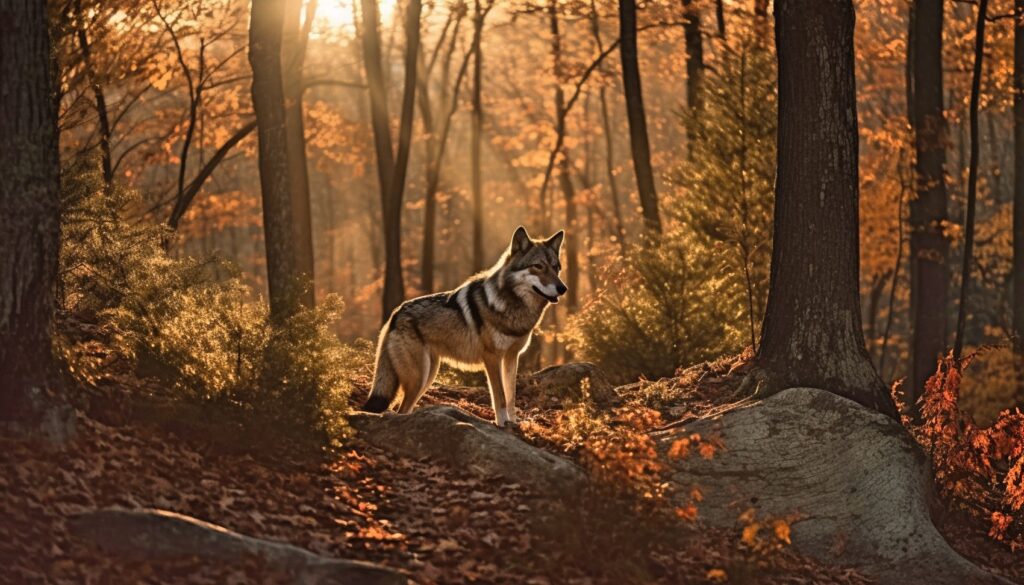
Answer 9: The pack works together to care for the young.
Question 10: What kind of regions do Eastern Wolves inhabit within their range?
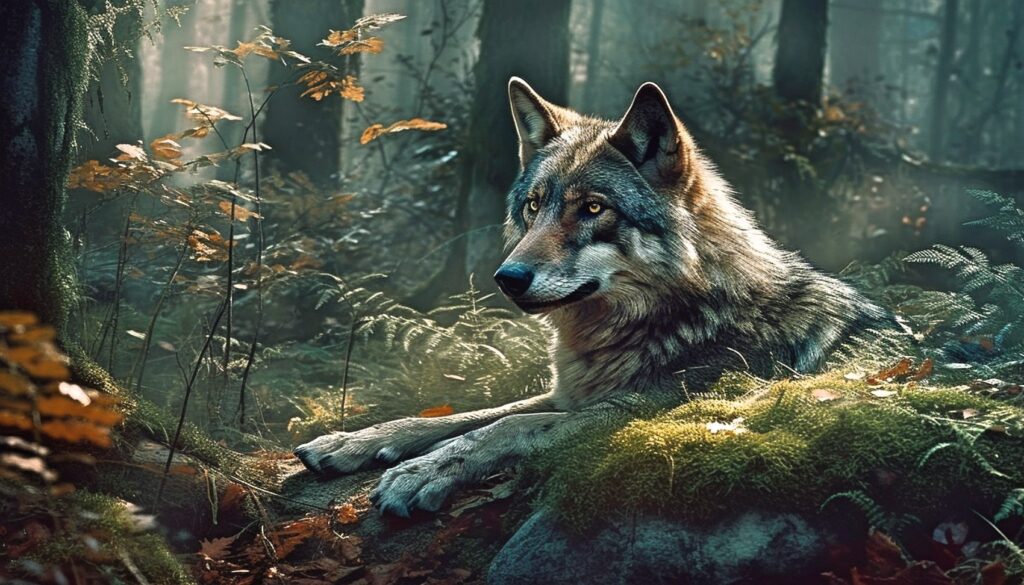
Answer 10: Dense woodlands and open fields.
Question 11: Is the Eastern Wolf a separate species from the Gray Wolf?
Answer 11: It is debated. Some genetic studies treat it as its own species, Canis lycaon, closely related to the red wolf and coyote, while others classify it as a gray wolf subspecies, Canis lupus lycaon.
Question 12: Which protected area holds the largest population of Eastern Wolves?
Answer 12: Algonquin Provincial Park in Ontario, Canada.
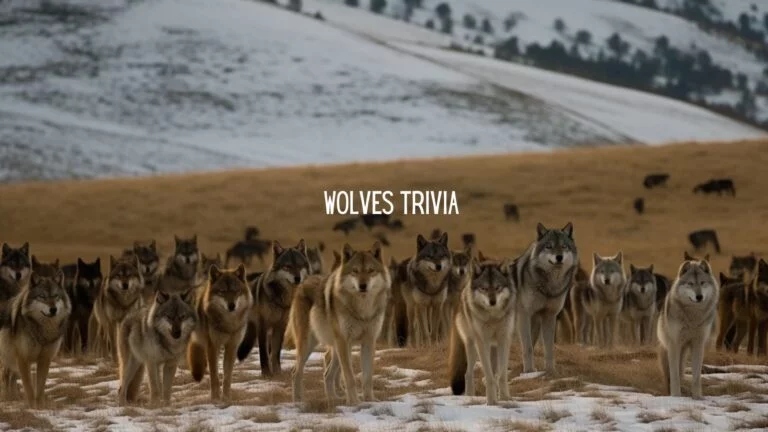
Wolves Questions & Answers Trivia Game


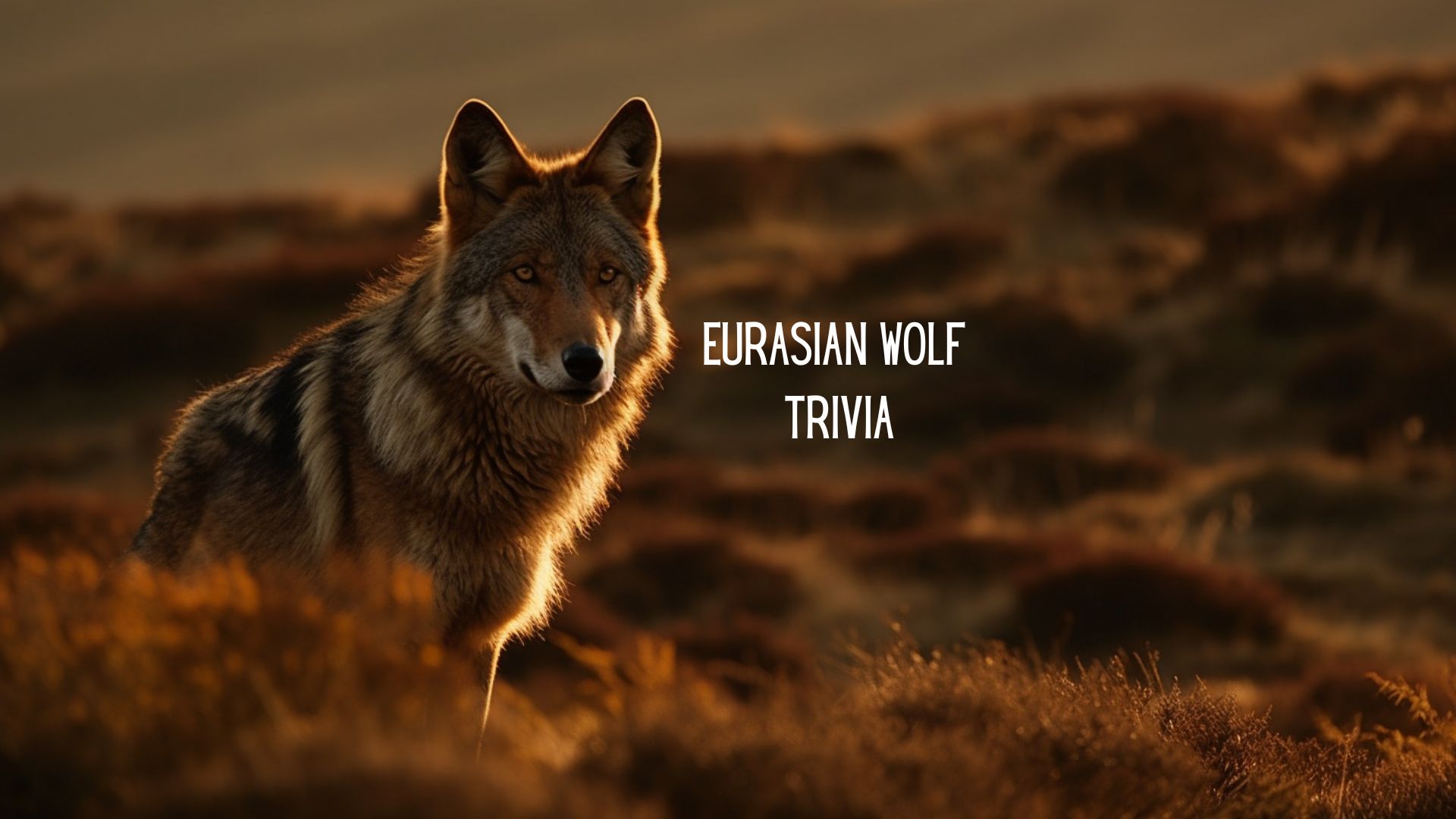

Updated 8 October 2026: corrected the dating of the eastern wolf and coyote split.

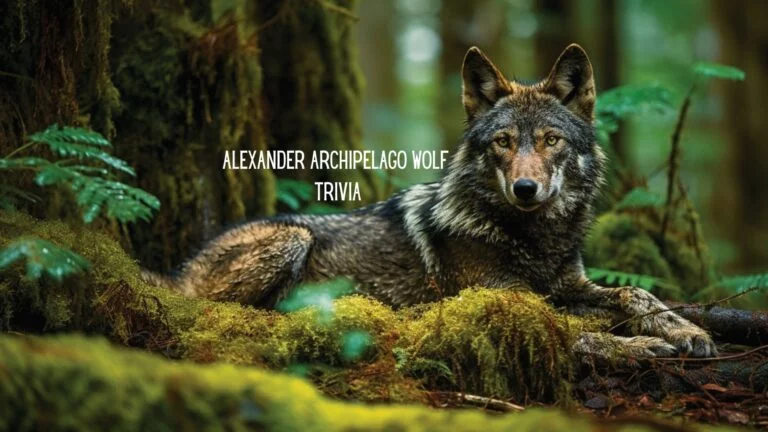


Algonquin is the best place to study them since the park protects them.
And it gets worse the further you go from the park, from what I’ve read.
Ask three labs what the eastern wolf is and you’ll get three answers.
i’d struggle to tell a small one from a big coyote, honestly.