
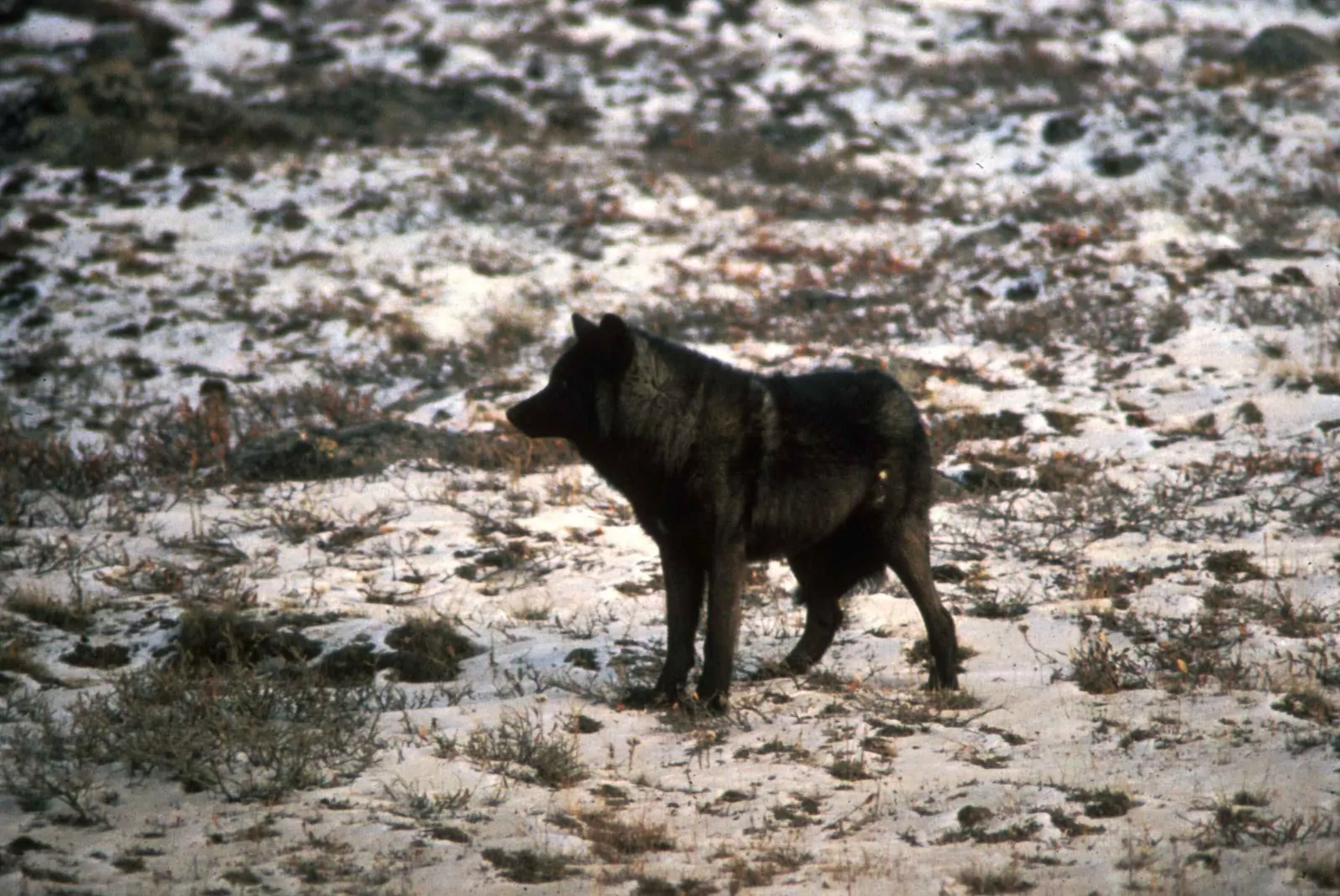
Black Wolves in North America
3 min read
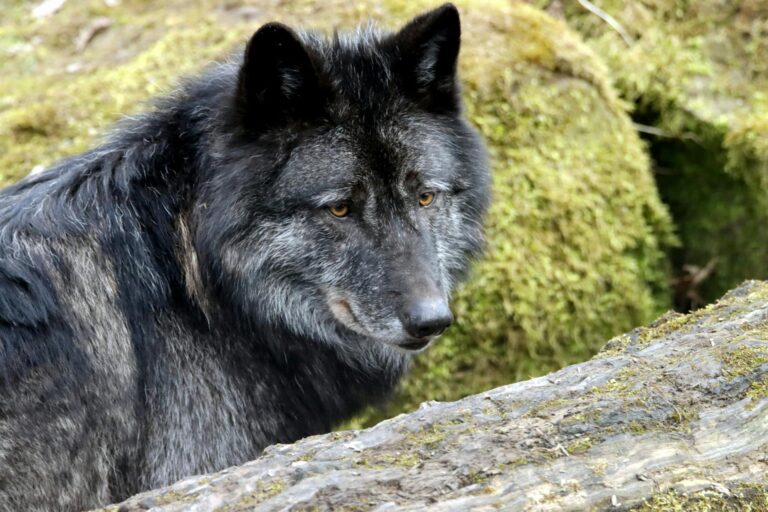
Black wolves are rare across most of the world and common in North America, and the further south you go on the continent the more of them there are. That gradient sat unexplained for a long time. Then a team led by the ecologist Sarah Cubaynes at the University of Montpellier tied the black coat to a virus, canine distemper, and published the result in Science in 2022. This page covers where North America’s black wolves come from, the gene behind the colour, and why a disease has quietly shaped what wolves on this continent look like.
The gene behind a black coat
Coat colour in the gray wolf is controlled at a stretch of DNA called the K locus, specifically the gene CBD103, canine beta defensin 3. The default output is the familiar grizzled gray. Black comes from a three base pair deletion in CBD103, known as the KB allele.
The interesting part is where the mutation came from. Not from wolves. It arose in domestic dogs and crossed into wild wolves through interbreeding, most likely thousands of years ago when wolves and the dogs of early human settlements were living in the same country. It then spread through North American wolf populations fast enough to leave the genetic signature of a selective sweep, which only happens when a gene is doing something useful for the animals carrying it.
Every wolf carries two copies of the K locus, one from each parent. The black allele is dominant, so one copy is enough to make a black wolf. Two gray copies gives you a gray one.
Anderson and colleagues, who traced black coats in wolves to this gene in 2009, estimated that the variant arose in dogs about 50,000 years ago, with a wide margin of error, and entered North American wolves through dogs within roughly the last 10,000 to 15,000 years. They also found black wolves more common in forest than on open tundra.
Why distemper favours black wolves
CBD103 is not only a colour gene. Beta defensins are immune proteins, active in the skin and airways, that help fight infection. That double job is the whole story. The Cubaynes team combined data from 12 North American wolf populations with the long term records from Yellowstone, and tested which animals carried antibodies to canine distemper virus, meaning they had met it and survived. Survivors skewed black.
Distemper moves through wolf populations in periodic outbreaks and can kill a large share of a year’s pups. Where the virus is endemic, carrying a black allele improves the odds. Where it is not, gray wolves do slightly better on reproductive success. The colour you see in a given region is, in effect, a record of what the local wolves have been exposed to.
The Yellowstone evidence
Yellowstone supplies the best long run dataset, because its wolves have been individually tracked since reintroduction in 1995. Roughly half the park’s wolves are black, which is a strikingly high share by world standards and is what made the question worth asking in the first place.
The detail that cracked it: most black Yellowstone wolves carry only one copy of the black allele. Animals with two copies are uncommon. That is the signature of heterozygote advantage, where the best hand is one of each rather than a matched pair. Two black copies appears to carry a cost even though the wolf looks identical.
Mate choice keeps both colours in play
The team found a second mechanism holding the mix steady. In areas where distemper outbreaks are regular, wolves appear to pair with a mate of the opposite colour more often than chance would predict.
That is precisely the pairing that produces the one black, one gray pups that survive an outbreak best. Disease pressure and mate choice working together is why North America keeps a stable mixture rather than drifting to one colour or the other.
Black wolves outside North America
Across most of Eurasia black wolves are rare. Italy is the exception: in a 3,300 square kilometre study area in the northern Apennines, Apollonio and colleagues (2004) found that 22 percent of the wolves observed were black. The same dog-derived variant causes the black coat there.
The short version
- Origin: the black allele entered wolves from domestic dogs, not from a wolf mutation.
- Gene: CBD103 at the K locus, a beta defensin with a role in immunity.
- Pressure: canine distemper outbreaks select for black coats where the virus is endemic.
- Best genotype: one black copy plus one gray copy.
- Behaviour: in those areas, wolves tend to pair with a mate of the opposite colour.
A black wolf in Yellowstone carries a visible trace of an old collision between dogs, wolves and a virus, still being played out in every litter.
Bring wolves home
Love what you read? Browse our wolf merchandise store for gear inspired by these incredible animals:
Read more on our complete guide: Wolf Species: A Complete Guide.
Updated 8 October 2026: corrected the publication year of the Cubaynes study (Science, 2022); merged our post on why some wolves are black into this guide.


the distemper link blew my mind. the black coat might actually help them get through outbreaks.
the black coat came from dogs originally, which i love. a gift going the other way for once.
Small thing: the gene is usually written CBD103. Easy typo.
Good spot. It’s a beta-defensin gene, if anyone wants to look it up.
Since black is dominant, one black parent can give you a lot of black pups.