

The Life And Times Of Werner Freund: The Wolfman
2 min read
Werner Freund spent forty years living among wolves in a park he built himself, and by the end he could take meat from a carcass with his teeth alongside them. He was born on 2 March 1933 in Garbenteich and died on 9 February 2014 in Merzig, in the German Saarland, where his Wolfspark still carries his name.
Before the wolves
Freund’s early working life was ordinary enough. He trained as a gardener and worked as a wild animal keeper at the Wilhelma zoo in Stuttgart, joined the Bundesgrenzschutz, the West German border police, in 1955, and moved to the Bundeswehr in 1957 as a paratrooper, eventually reaching the rank of Stabsfeldwebel. From 1961 he looked after his battalion’s animals. He also led expeditions, which is where the interest in living alongside animals rather than merely keeping them appears to have started.
He married his wife Erika in 1962 and the two of them were together for more than fifty years. She was part of the wolf project from the beginning, which is a detail most accounts of Freund skip over.
The Wolfspark
Freund took in his first wolf, Ivan, in 1972. From 1977 onward, with Erika’s support and local backing, he built what became the Wolfspark Werner Freund at Merzig, and over the following decades it grew into a set of separate packs housed in large wooded enclosures.
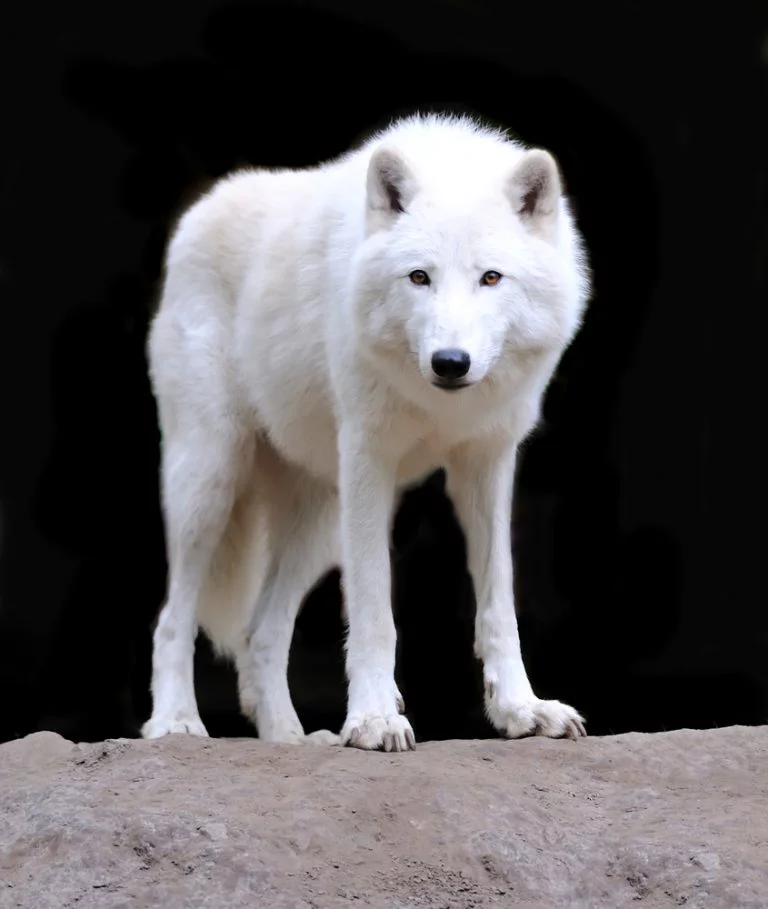
His method was to raise cubs himself and then live with them on their terms rather than manage them from outside the fence. He let them lick his face, tore into carcasses alongside them, and howled with them. Reuters photographer Lisi Niesner’s pictures of Freund among the wolves, taken in his late seventies, are how most people outside Germany came across him. By the end of his life he was caring for roughly thirty animals.
He wrote about it too. Der Wolfsmensch appeared in 1988, Mein Leben mit Bären in 1994, and Wolf unter Wölfen in 1999. He had kept bears before he kept wolves.
The alpha question
Freund described himself as the alpha of his packs, and he is quoted saying that to earn their respect one must become a wolf. It is worth being straight about this. The alpha model he was working from came from studies of unrelated captive wolves and has been out of the scientific literature since the 1990s, and what Freund had built was precisely the artificial situation that produced the model in the first place: hand-raised, unrelated animals in enclosures, with a human in the middle of the social structure.
That does not make what he did fake. He clearly held a real place in those groups and the animals clearly accepted him. It does mean his packs were not a window onto how wild wolf families work, and anyone reading his story as evidence about wild wolf behaviour is reading it wrong. Our piece on wolf pack mentality covers what the wild picture actually looks like.
Recognition and the end
Freund received the Saarland Order of Merit in 1995, was made an honorary citizen of Karakol in Kyrgyzstan in 1997, and received Merzig’s civic medal in 2003. In 2013 the town named a street after him.
He was still going into the enclosures in his eighties. He died on 9 February 2014, aged 80, after a short illness. The Wolfspark continues.
Bring wolves home
Wolf books and clothing are available in the We Love Wolves store at store.welovewolves.org.
- Shop wolf books
- Shop wolf clothing
Read more in our complete guide: Wolf Conservation: Where We Are and What is Working.



the wolfspark in merzig is still open i think. would like to go one day.
Has anyone been recently? I’d like to know what it’s like now.
The photos of him with the wolves are something else.
imagine living with them for decades. the patience that must have taken.
strange mix of showman and researcher. not sure what to make of him honestly, but i couldn’t stop reading.