
Indian Wolf: The Vulnerable Wolf of South Asia, Full Profile
5 min read
The Indian wolf (Canis lupus pallipes) is the lean, short-coated gray wolf of the semi-arid scrublands of peninsular India and Pakistan. The IUCN put the total at about 3,100 mature animals across India and Pakistan in October 2025, and the large majority of them live outside protected areas, on farmland and community grazing ground, alongside people.
Key facts
- Scientific name: Canis lupus pallipes
- Shoulder height: 55 to 75 cm
- Body length: 0.9 to 1.2 m
- Weight: 18 to 27 kg
- Diet: blackbuck, chinkara, hare, peafowl and other ground birds, rodents, livestock
- Habitat: semi-arid grassland, scrub, agricultural mosaic
- Pack size: 3 to 8
- Population: about 3,100 mature individuals in India and Pakistan (IUCN, 2025)
- IUCN status: Vulnerable (October 2025)
Identification
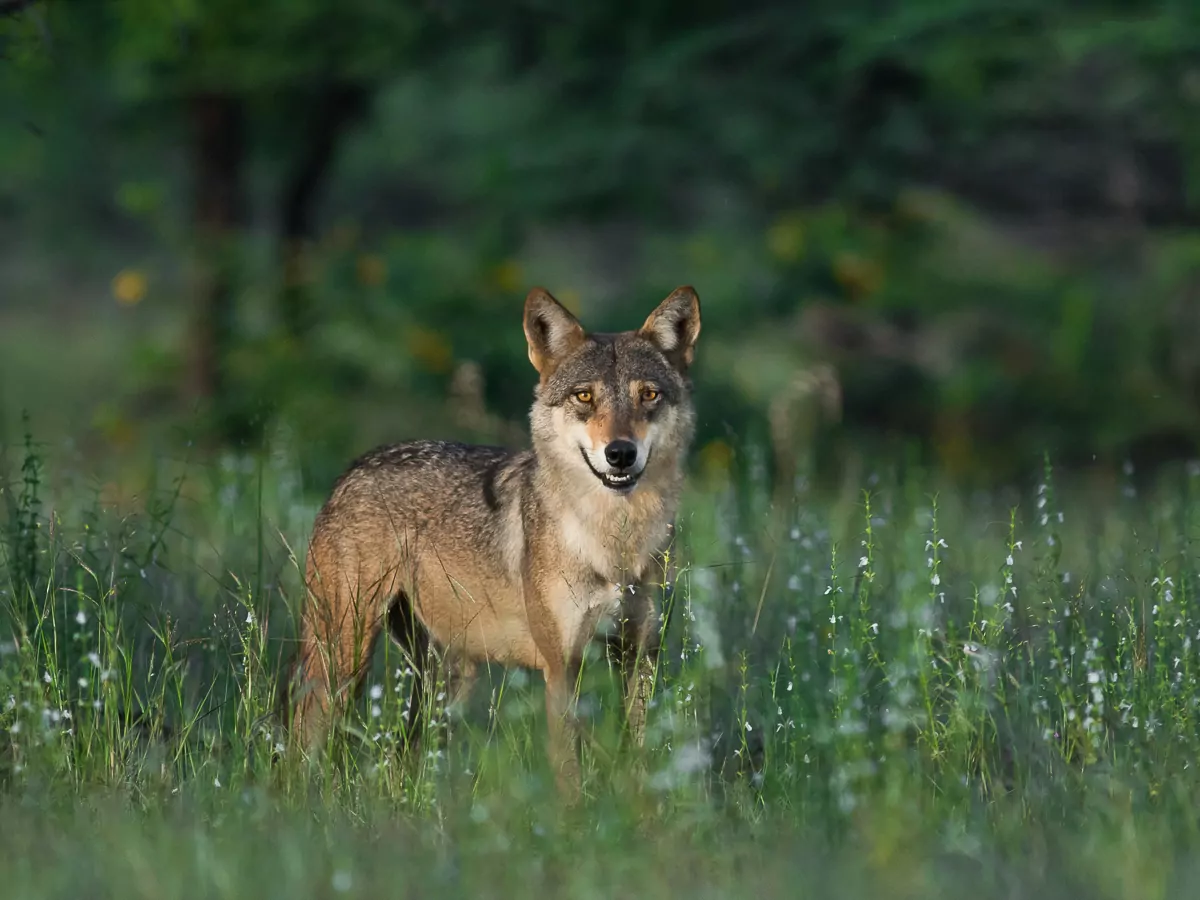
One of the smallest gray wolves, at 18 to 27 kg. The coat is short and coarse, sandy brown to greyish buff, paler underneath, with reddish tones around the ears and muzzle. Next to a Eurasian or Mackenzie Valley wolf it looks stripped down: lighter frame, longer legs, proportionally larger ears for shedding heat.
Genetic work over the last two decades has repeatedly shown the Indian wolf to be a deep, distinct lineage within Canis lupus, possibly the oldest surviving gray wolf lineage. Some authors argue for full species status. In October 2025 the IUCN assessed it separately for the first time, listed it as Vulnerable and noted it may be a distinct species. Indian law still treats it as a gray wolf subspecies.
The strongest evidence so far is a 2021 whole-genome study by Hennelly and colleagues in Molecular Ecology. It found Indian and Tibetan wolves distinct from each other and from the wolves of the rest of the northern hemisphere, with the Indian lineage possibly the most ancient surviving wolf lineage of all.
Range and habitat
The range is fragmented across peninsular India, with the largest populations in the semi-arid country of Maharashtra, Gujarat, Madhya Pradesh, Rajasthan and Karnataka. Outside India, smaller numbers persist in Sindh and Balochistan in Pakistan, and the subspecies historically extended west through Iran and into the Arabian region.
The habitat is dry scrub, grassland and farmland mosaic, and less than 5 percent of the Indian population lives inside a formally protected area. That single figure explains most of the conservation difficulty: this is a wolf that has to be managed on land people farm and graze, not inside a park boundary.
Diet and hunting
Blackbuck and chinkara are the largest wild prey, but both have themselves been depleted across much of the range, which pushes wolves toward hare, ground birds, rodents and livestock. Sheep and goats are taken regularly through the Maharashtra and Karnataka core.
Pack hunts on blackbuck are well described: two or three wolves cut the animal off while the rest close in. Most of the time, though, these are small-prey hunters working alone or in pairs. Packs stay small, three to eight, because the prey base will not support more.
Attacks on people
India has the worst modern record of wolf attacks on humans anywhere. The Uttar Pradesh attacks of 1996 and 1997 killed over 50 children and remain the most extreme documented case of wolf predation on people in modern times.
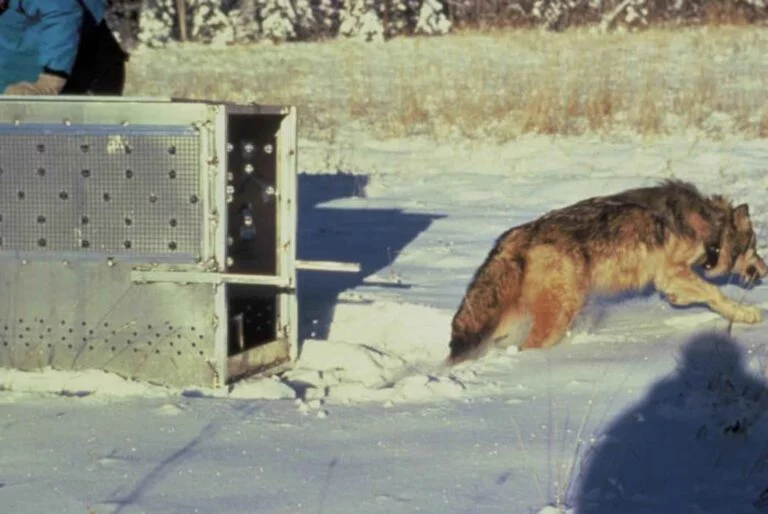
It happened again in 2024. Between March and September that year, attacks in Bahraich district in Uttar Pradesh killed at least ten people: nine children and a 45-year-old woman. The state response, Operation Bhediya, captured five wolves, two of which died during capture.
The drivers are consistent across both events: extreme habitat compression, depleted wild prey, and rural sleeping arrangements that leave small children outdoors at night in wolf country. The animals responsible in documented cases have generally been individuals rather than packs. Indian authorities respond by removing identified animals.
Threats and legal status
The Indian wolf is listed on Schedule I of India’s Wildlife Protection Act 1972, which is the highest level of legal protection the Act provides. That is a protection category rather than a threat assessment: the IUCN assessed pallipes on its own for the first time in October 2025 and listed it as Vulnerable, with a declining trend, while the gray wolf as a whole stays Least Concern.
What the population actually faces: retaliatory killing after livestock and human attacks, conversion of grassland and scrub to irrigated cropland, interbreeding with the enormous free-ranging dog population, rabies and canine distemper carried by those same dogs, and road mortality on rural roads cut through wolf territory.
The Grasslands Trust, based in Pune and founded by Mihir Godbole, is the organisation doing the most visible work on Indian wolves, running monitoring and school and community outreach across the Maharashtra core range. Grassland conservation in India has historically been treated as wasteland policy, which is the underlying problem this wolf sits inside.
Culture
Indian folklore is full of wolves, and a good deal of it is unflattering: the bhediya as a cunning night hunter. Several regional traditions carry wolf-raised child stories, the most famous being the 1920 Midnapore case of Amala and Kamala, which is now generally regarded as a fabrication by the missionary who reported it.
In parts of Maharashtra and Gujarat wolves are lumped in with hyenas under terms that translate roughly as scavenger, which has not helped public sympathy.
Reproduction and pack life
Breeding runs earlier than in temperate wolves. The pair mate in the October to December window and pups arrive in December to February after around nine weeks of gestation, in dens dug into riverbanks or set under rocky outcrops. Litters are typically four to six.
Pack structure follows the standard gray wolf pattern: a breeding pair plus offspring from the last year or two. Average life expectancy in the wild is around five to seven years, and most recorded deaths are human-caused, through retaliation killing, vehicles, snares and poison.
Where to see an Indian wolf
Velavadar Blackbuck National Park in Gujarat is the best-known site, followed by the Great Indian Bustard Sanctuary near Nannaj in Maharashtra and Rollapadu Wildlife Sanctuary in Andhra Pradesh. All three hold modest but genuinely viewable wolf populations and are reachable by road from major cities.
Local guides working with grassland conservation groups are the way to find them. We have seen various sighting-rate claims quoted for these sites and cannot source any of them, so plan on a few days rather than an afternoon.
Outside India the species is effectively unviewable as a tourist. A handful of Indian zoos hold Indian wolves for breeding and education, including Mysuru Zoo and the Sakkarbaug Zoological Garden in Junagadh.
Frequently asked questions
Is the Indian wolf a separate species? Currently a gray wolf subspecies, Canis lupus pallipes. Genetic work shows it is one of the most ancient surviving gray wolf lineages, and some authors argue for full species status. The IUCN listed it separately as Vulnerable in October 2025 and flagged it as a possible distinct species; Indian law has not changed.
How many are left? About 3,100 mature individuals across India and Pakistan, by the IUCN’s October 2025 estimate. Fewer than 5 percent live inside protected areas.
Do Indian wolves attack people? Yes, more than any other wolf population. Over 50 children died in the 1996 and 1997 Uttar Pradesh attacks. At least ten people died in the 2024 Bahraich attacks, nine of them children.
How does it differ from a northern gray wolf? Much smaller at 18 to 27 kg, slimmer, longer-legged, larger-eared, short sandy coat. Smaller packs and smaller prey.
Where can I see one? Velavadar Blackbuck National Park in Gujarat is the most reliable, with Nannaj in Maharashtra and Rollapadu in Andhra Pradesh as the other options.
Updated 8 October 2026: updated the IUCN status (Vulnerable, October 2025) and the population estimate; merged our post on the wolves of India into this profile.

mayureshwar is a small sanctuary near pune but it is reliable for indian wolf sightings if you go early. saw three on my last visit.
Has anyone seen the photos of black wolves from around Solapur? Would love to know if anyone has looked at the genetics.
The naming is a mess. Pallipes, indica, separate species or not. I’ve given up keeping track.
Same! Whatever we end up calling it, it sounds like a very old and distinct lineage from what I’ve read.