
Do Lone Wolves Really Exist Or Not?
3 min read
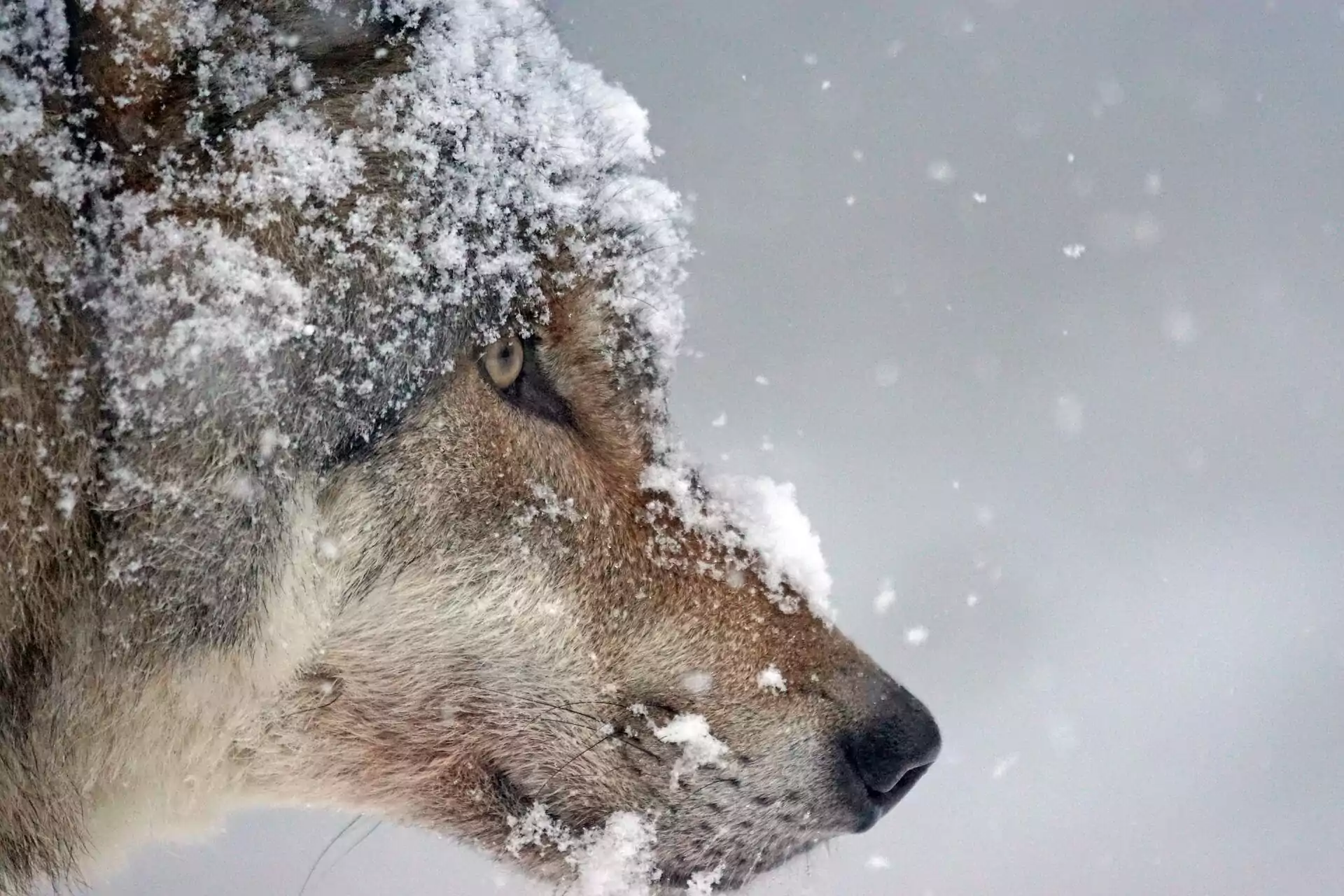
Lone wolves are real. They are just not what the phrase has come to mean. Almost every wolf travelling alone is a young animal on its way somewhere, and most of them are doing the single most important thing a wolf ever does.
Why a wolf leaves
A pack is a family: a breeding pair and their offspring from the last few years. That structure has one obvious consequence. If you stay, the only wolves available to breed with are your parents and your siblings. So you leave.
Dispersal usually happens between one and four years old, around the point of sexual maturity, and both sexes do it. Dispersal is the normal life stage in which a wolf goes looking for a mate and unoccupied ground, and it is how the species avoids inbreeding and colonises new range.
About the alpha
Lone wolves are often explained with alphas, omegas and deposed leaders. That framing came from studies of unrelated captive wolves penned together, and it does not describe wild packs. L. David Mech, who did more than anyone to popularise the word alpha in the 1970s, spent years arguing against it and set it aside formally in 1999.
Wild packs do not run on rank fights, there is no ritual bottom-of-the-heap omega who eats last, and young wolves are not banished by a tyrant. The parents lead because they are the parents. The young leave because they want to breed. That is a duller story and it is the one the field data supports.
How far they go
A long way. Dispersals of 206 km, 390 km and 670 km from the birthplace have all been recorded. A dispersing wolf crosses territory belonging to other packs, which is dangerous, and it hunts alone, which is harder. It also tends to go quiet: howling advertises your position, and a lone wolf in occupied ground has good reason not to.
A resident pack covers ground at a trot it can hold for hours. On Isle Royale, Mech’s study recorded about 45 miles (72 km) as the longest distance a pack covered in 24 hours, and in Alaska Burkholder’s pack averaged about 15 miles (24 km) a day over 15 days of travel. Dispersers go much further over weeks and months. OR-7 travelled more than 1,600 km from northeastern Oregon into California and back before settling in southern Oregon; his story is in our post on famous wolves.
What happens next
Three outcomes. It finds another disperser of the opposite sex and unclaimed ground, and the two of them become the founding pair of a new pack. It joins an existing pack that has a vacancy. Or it dies, often killed by resident wolves or by people. That risk is a large part of why so few wild wolves reach old age.
The first outcome is how wolves recolonise entire countries. Several recovered European populations, Scandinavia’s and Germany’s among them, trace back to a handful of animals that walked into empty habitat and found each other there.
A disperser that meets another of the opposite sex can pair up, claim vacant ground and produce a litter the following spring. When a breeder in an established pack dies, the survivor often pairs with a new disperser within months. That is the usual way an unrelated adult joins a pack, and it is why killing a breeding wolf can do more than remove one animal: it can lead to a rebuild, a shift in territory or a split into two groups.
So do lone wolves exist?
Yes, and it is a phase rather than a personality. The lone wolf of the expression, the loner who chose solitude and thrives outside the group, is not an animal. It is a story people tell about themselves using an animal that spends its whole life trying to get back into a family.
Read more on our complete guide: Wolf Behavior: How Wolves Live, Hunt and Communicate.
Updated 8 October 2026: corrected the causes of death for dispersing wolves and which European populations were founded by dispersers; merged our posts on how packs form and disperse and how far wolves travel into this guide.


funny how lone wolf means tough and independent in everyday language when the real thing is usually a young wolf trying to find a mate and some space.
Does anyone know roughly how many dispersers actually make it?
Some leave, some get pushed out. Hard to tell which without watching the pack for a long time.
Dispersal explains most of it. A young wolf leaves, looks for empty range and a mate, and either finds them or doesn’t.