
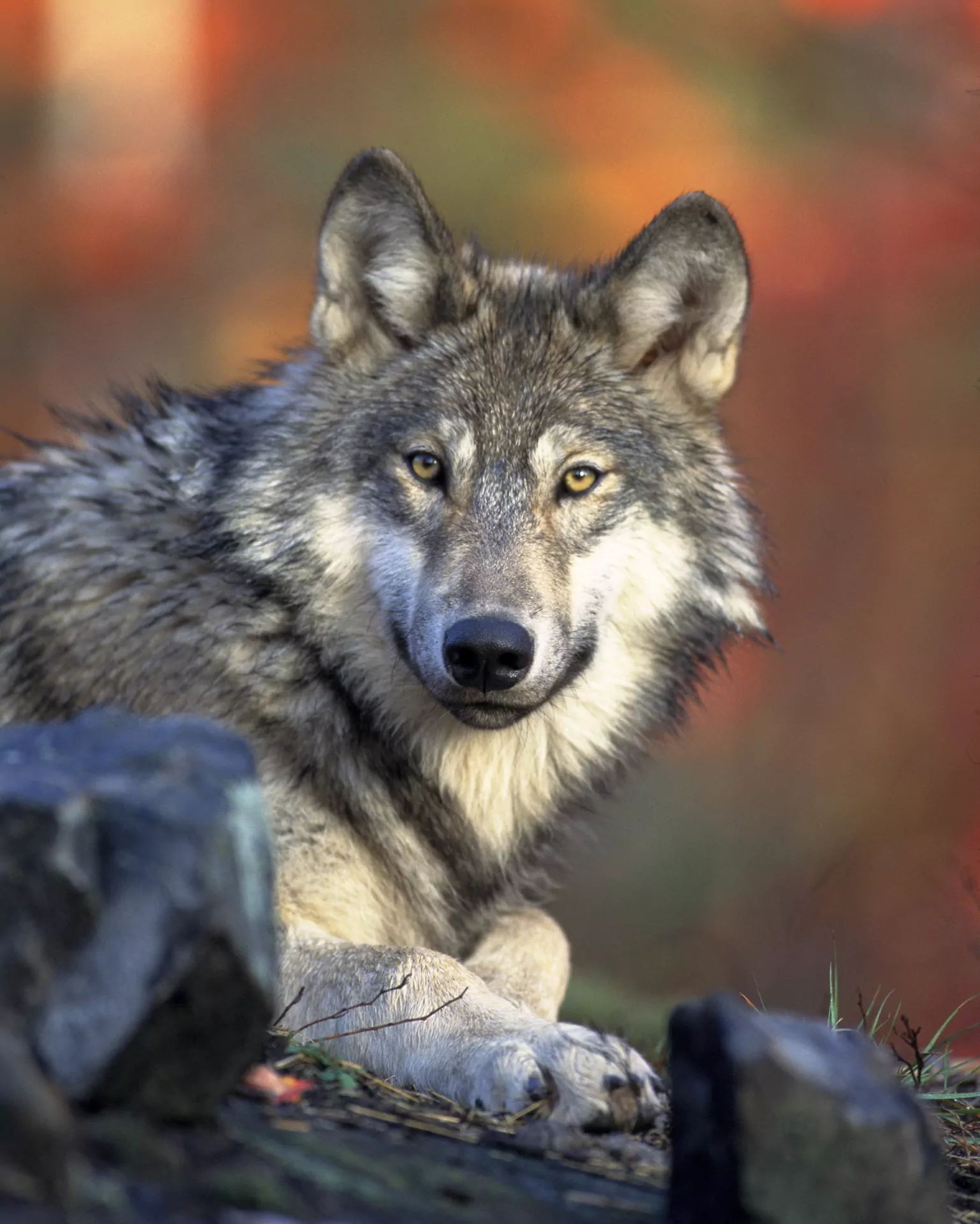
Wolf Names and Meanings From Around the World
4 min read
Wolf names, grouped by language family, with meanings we could trace to a source. Use them for a dog, a character, a team or a business.
Latin and Greek
Lupus is Latin for wolf and Lupa is the feminine, the she-wolf who suckled Romulus and Remus. Lycos, or Lykos, is the Greek, and it is the root of lycanthrope and of Lycaon, the Arcadian king Zeus turned into a wolf. Larentia appears in the Roman foundation story as the twins’ foster mother and is sometimes identified with the Lupa herself.
Lupin comes from lupinus, of the wolf, which is why the lupin flower and the werewolf professor in Harry Potter share a name from opposite directions. Akela, from Sanskrit and Hindi, means alone or solitary, and Kipling used it for the leader of the pack in The Jungle Book, from where it spread into Scouting and into general use.
Norse and Old English
Old Norse used wolf words heavily in warrior names. Ulf is wolf, Ulfar is warrior wolf, Ulfhild is a female form. Fenrir is the monstrous wolf of Ragnarok. Skoll and Hati chase the sun and the moon. Geri and Freki are Odin’s wolves, meaning greedy and ravenous.
Old English gives Wulf, Wulfgar (wolf spear), Wulfstan (wolf stone), Wulfric (wolf ruler), Aelfwulf (elf wolf), Sigwulf (victory wolf) and Oswulf (god wolf). Beowulf is the odd one out: it is literally bee wolf, a kenning for bear. Across the Germanic world wolf was a compliment in a man’s name. He was a wolf in battle and something else entirely at home.
Indigenous North American
Handle this section with care. Many of the wolf names circulating in English from Indigenous languages were collected and romanticised in the nineteenth century, and spellings, meanings and pronunciations often drifted a long way from the source language. Several names that appear on name lists as meaning wolf turn out to mean something else, or to be untraceable. We have cut the ones we could not check, including one that appeared on this page for years.
The ones commonly given: Maikoh (Navajo), Mahigan and Maheegan (Cree and Algonquin), Waya and the clan name Aniwaya (Cherokee), Nashoba (Choctaw), Honiahaka (Cheyenne, little wolf), Tikaani (Athabaskan) and Tala (Sioux).
Turkic, Mongolian and Central Asian
Wolves sit at the centre of Turkic and Mongolian origin stories, so the vocabulary is rich and the names are still in everyday use. Bori (Turkic and Uzbek), Boru (Kazakh) and Kurt (Turkish) all mean wolf. Bozkurt is the grey wolf. Asena is the legendary she-wolf mother of the Gokturks. Chono is Mongolian for wolf, and Borte Chino, the grey wolf, opens the Mongol origin myth in The Secret History of the Mongols.
East Asian
Okami is Japanese for wolf. The Honshu wolf, Canis lupus hodophilax, is extinct, but it was a protective mountain spirit in village folklore long before it was a museum specimen, and shrines associated with wolf veneration still exist. In the animated film Wolf Children the two children are named Ame and Yuki, rain and snow.
Chinese Lang means wolf, compounding into Lang Wang (wolf king) and Cang Lang (grey wolf). Korean is Neukdae. Tibetan Changku refers to the Himalayan wolf.
Welsh, Irish and Scottish
Welsh gives blaidd for wolf, and the personal name Bleiddian is built on the same root. Irish gives Faolan, little wolf, and Conan from con, meaning hound or wolf. Cuchulainn, the hound of Culann, belongs to the same semantic field even though he is a hound rather than a wolf.
Scottish Gaelic has Madadh for wolf and Madadh Allaidh for the wild one. On the last Scottish wolf, be sceptical of anyone who sounds certain. The account usually treated as the record has Sir Ewen Cameron of Lochiel killing one at Killiecrankie in Perthshire in 1680. A separate and much-repeated story has a man named MacQueen killing the last wolf at Findhorn in 1743, and that one is folklore rather than record. Merging the two, as this page previously did, produces a confident sentence that is wrong in both halves.
Slavic
Volk (Russian), Vuk (Serbian and Croatian), Wilk (Polish), Vilkas (Lithuanian), Vlk (Czech) and Farkas (Hungarian, and a very common surname) all mean wolf. The folklore runs deep: the Volkolak and the southern Slavic Vukodlak are wolf demons, ancestors of the werewolf. The Serbian custom of naming a boy Vuk to protect him from evil spirits is still alive.
Fiction and modern use
Game of Thrones supplied Ghost, Grey Wind, Lady, Nymeria, Summer and Shaggydog for its direwolves. Twilight uses Jacob, Sam, Embry, Leah and Seth for its shapeshifters. Elsewhere in fiction: Akela from Kipling, Two Socks from Dances With Wolves, White Fang from Jack London, and Lupin from Harry Potter.
For pets, the wolf-adjacent names people actually reach for are Luna, Loki, Storm, Shadow, Ghost, Smoky, Tundra and Yukon. None of them mean wolf. They just sound like one, which for a dog is usually the point.
Related reading on welovewolves
- Gray wolf species profile
- Wolves in mythology and legends
- The history of wolves and dogs
- Memorable wolves in movies and TV
Frequently asked questions
What name means wolf?
The direct translations are Lupus (Latin), Lykos (Greek), Ulf (Old Norse), Wulf (Old English), Bori (Turkic), Kurt (Turkish), Chono (Mongolian), Volk (Russian), Vuk (Serbian), Blaidd (Welsh), Faolan (Irish), Madadh (Scottish Gaelic), Okami (Japanese) and Lang (Chinese).
What is a good wolf name for a dog?
Pick a language rather than a list. Vuk, Bori, Faolan and Ulf all mean wolf and are short enough to shout across a field, which is the real design constraint.
Is Lupin a wolf name?
Yes, from the Latin lupinus. Remus Lupin in Harry Potter is a triple reference: Remus from the she-wolf myth, Lupin from the root, and the werewolf itself. The lupin flower takes its name from the same root independently.
What does Akela mean?
Alone or solitary, from Sanskrit and Hindi. Kipling gave it to the pack leader in The Jungle Book, and Scouting borrowed it from there for the leader of a cub pack.
What is the most famous wolf name?
Fenrir, most likely, with Romulus and Remus close behind. In current popular culture, Ghost from Game of Thrones. Among real animals, the Yellowstone wolf known as 06F, collar number 832F, is the best known by some distance.
Updated 8 October 2026: corrected the Welsh word for wolf, removed Lucian (it comes from the Latin for light) and Buck (a dog in Jack London’s story).


Nashoba Lakota indian for wolf
Short names work better when you’re calling a dog across a field. I’d skip the long ones.
amaguk and amarok are the same word in different inuit dialects as far as i know. spelling varies a lot.
I named my husky Bjomolf. Norse for bear-wolf. He has no idea but I think it suits him.
Beowulf is usually read as bee-wolf, a riddle name for a bear. Intelligent wolf is a new one to me.
That’s the reading I learned too.