Wolves in Norse Mythology: Fenrir and the End of Days
3 min read
Norse mythology has the least sentimental wolves in European tradition. They are forces, not villains and certainly not pets, and one of them ends the world.
Fenrir, son of Loki, is the creature the gods fear most. Two more wolves, Skoll and Hati, run down the sun and the moon. Two others eat at Odin’s own table. Between them they cover most of what the Norse had to say about the animal.
Fenrir
Fenrir is the wolf son of Loki and the giantess Angrboda. The gods raised him in Asgard, watched him grow, and decided he had to be bound. Two ordinary chains failed. The third, Gleipnir, was made by dwarves out of six impossible things: the sound of a cat’s footfall, a woman’s beard, the roots of a mountain, the sinews of a bear, the breath of a fish and the spittle of a bird.
Fenrir agreed to be bound only if one of the gods put a hand in his mouth as surety. Tyr did it, and lost the hand when the binding held. That detail is the moral centre of the story: the gods win by breaking their word, and pay for it.
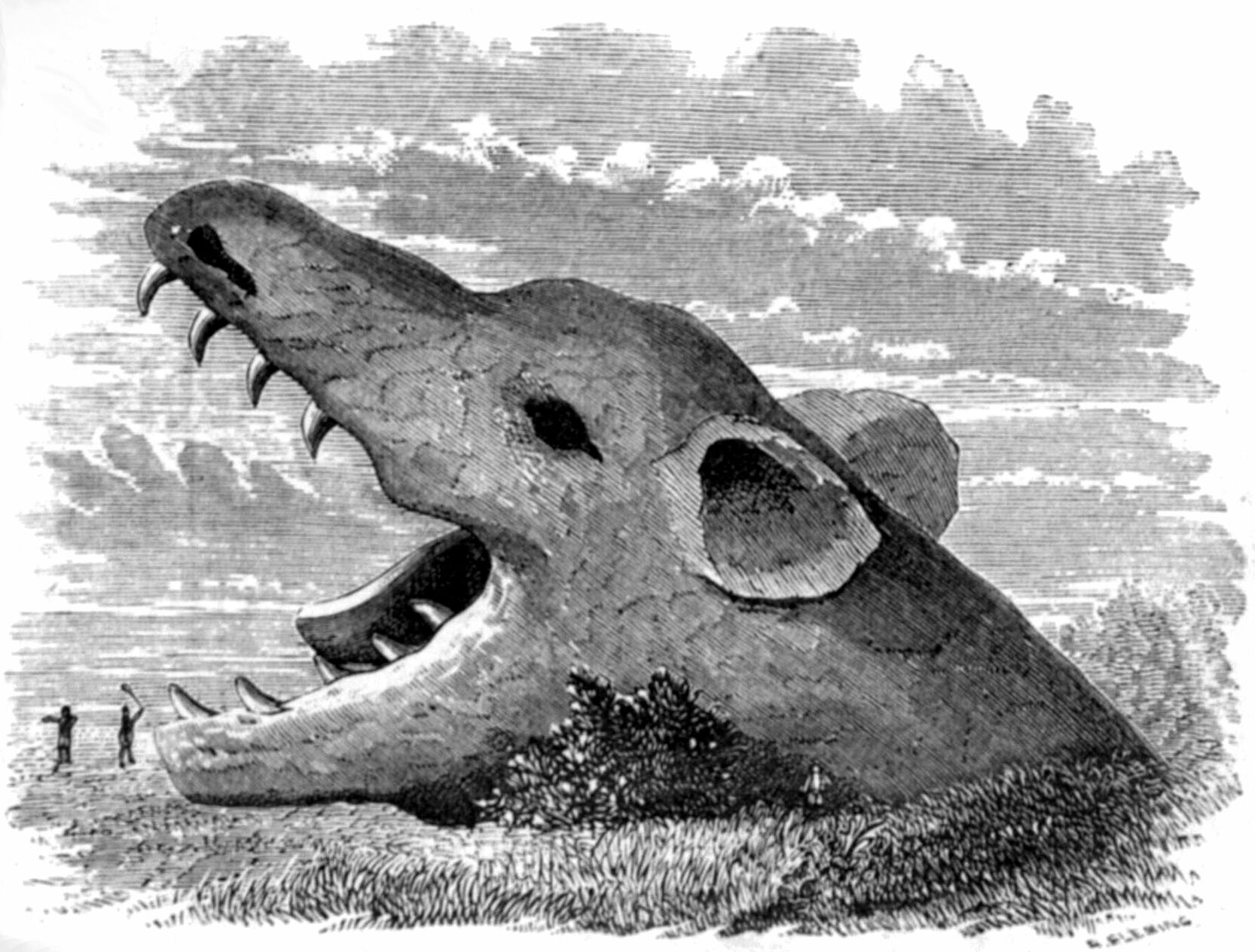
At Ragnarok the chain fails. Fenrir comes loose with his jaws gaping from earth to sky and swallows Odin. Odin’s son Vidar kills him by wrenching the jaws apart, which is the one clean act of vengeance in the whole sequence.
Skoll and Hati
Skoll chases the sun across the sky and Hati chases the moon. They have been running since the beginning, and the pursuit is why the sky moves at all. In Gylfaginning the long winter, Fimbulwinter, comes first. Then, as Ragnarok begins, the wolves catch what they are chasing and the light goes out.
The sources are not tidy about which wolf swallows the sun. Gylfaginning gives it to Skoll and Odin to Fenrir. Elsewhere in the Eddic poetry a wolf simply called Fenrir takes the sun. Medieval Icelandic manuscripts are compilations of older oral material and they contradict each other freely.
Geri and Freki
Odin keeps two wolves at his table, Geri and Freki. Both names mean roughly the ravenous or greedy one, which is the sort of doubling Norse poetry does constantly. In Grimnismal, Odin feeds them everything set in front of him and lives on wine alone.
A god flanked by wolves is a sign of power, not of danger. The same animal that ends the cosmos also sits at the All-Father’s feet, and nobody in the tradition seems to have found that odd.
Where to read it
The Prose Edda, compiled by Snorri Sturluson in thirteenth-century Iceland, is the fullest single account. The Poetic Edda, an older collection of anonymous verse, carries the same figures in fragments. Skaldic poetry uses wolves constantly in kennings for warriors and for battle: to feed the wolf is to win a fight.
All of it was written down by Christians, centuries after the beliefs were live. That is worth holding in mind when the material seems unusually neat.
The shape of the myth
The Fenrir cycle is the bleakest wolf story that survived into writing. It reads less like fear of an animal and more like fear of the end of an order. Where the Romans gave the wolf a nursing mother, the Norse gave it the jaws that end the world.
Frequently asked questions
Is Fenrir the same as the Fenris wolf? Yes. Fenrir and Fenris are two names for the same animal in the Norse texts.
Where do we read about Norse wolves? Mainly the Prose Edda and the Poetic Edda, plus skaldic verse where wolves appear in battle kennings.
Did the Norse see wolves as good or bad? Both, depending on where the wolf stood. Battle-wolves were celebrated, Odin’s wolves were an emblem of power, and Fenrir was the end-bringer. The wolf was a force rather than a moral category.
Updated 8 October 2026: corrected the order of Fimbulwinter and the swallowing of the sun and moon.