The Himalayan Wolf: High Altitude Wolf of Asia
4 min read
Above 4,000 metres, where the air holds far less oxygen than at sea level, a thick-coated wolf hunts gazelles and marmots across the Tibetan Plateau. This is the Himalayan wolf, Canis lupus chanco, and it has long been overlooked by science and conservation. The IUCN Red List now rates it Vulnerable, with only 2,275 to 3,792 mature individuals left in the wild.
It also raises a live question about how we draw the wolf family tree. Here is what is known, and what is still argued over.
A wolf built for thin air
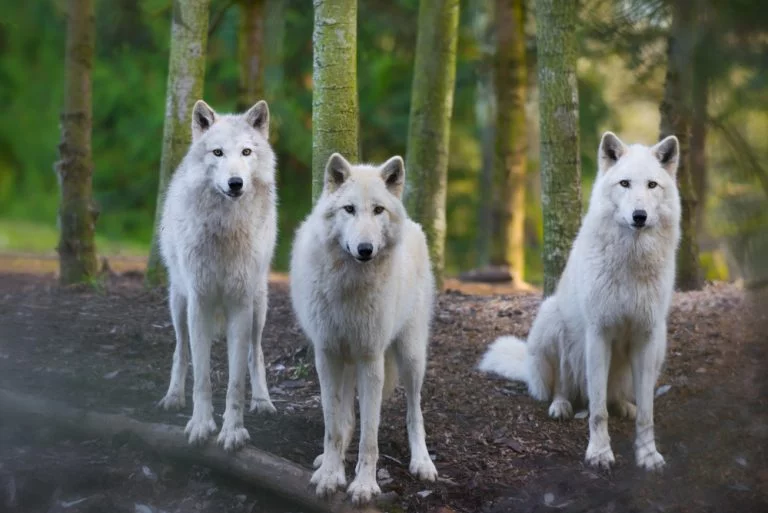
According to the Wikipedia summary of the research, the Himalayan wolf has thick, woolly fur that is dull earthy brown on the back and tail and yellowish white on the face, underside and limbs. Adults average around 30 to 55 kg and stand 68 to 76 cm at the shoulder.
The most interesting part is invisible. The same source notes that the wolf is often found above 4,000 m and that its heart shows strong selection for a gene called RYR2, which starts cardiac excitation. In plain terms, its body handles low oxygen better than a lowland wolf’s does.
Its voice is different too. Recordings of Himalayan wolf howls show lower pitch, less modulation and shorter duration than howls of the northern grey wolf. If you want to understand how wolves talk to each other, our guide to how wolves communicate beyond howling covers the usual repertoire.
An ancient branch of the wolf family
Mongabay India reports that the IUCN found the Himalayan wolf to be a distinct genetic lineage of ancient origin, adapted to life in the high-altitude ecosystems of the Himalaya and the Tibetan Plateau. For years it was assumed to be the same lineage as the grey wolf of Mongolia and nearby provinces. That assumption delayed its listing.
The dates vary by study. A 2004 mitochondrial DNA study put the split from other wolves at about 800,000 years ago. A 2021 study of both mitochondrial and nuclear DNA put it at 496,000 years ago, with the Indian lowland wolf splitting off about 200,000 years ago. Different methods give different numbers, so treat any single date with care.
Whether it deserves its own species name is still open. In 2019 the IUCN/SSC Canid Specialist Group recommended calling it the Himalayan wolf and keeping Canis lupus chanco for now, until the original specimens can be analysed. The lowland cousin has its own story in our Indian wolf profile, and another old lineage appears in the African golden wolf profile.
Where it lives and what it eats
The wolf ranges across the Himalayas of India and Nepal and the Tibetan Plateau of western China. In India, Mongabay quotes an estimate of 227 to 378 animals, found in Lahaul, Spiti, Ladakh and small parts of Sikkim and Uttarakhand.
On the plateau it prefers wild prey. The Wikipedia summary says it usually picks the smaller Tibetan gazelle over the larger white-lipped deer, and plains-dwelling gazelle over cliff-dwelling blue sheep. Marmots, pikas and woolly hares fill the gaps. Where wild prey is available, the wolves tend to avoid livestock.
Where wild prey is thin, herders lose animals. A livestock survey in three villages inside the proposed Gya-Miru Wildlife Sanctuary in Ladakh blamed wolves for 60% of losses, ahead of snow leopards and Eurasian lynx. Goats and sheep were the most common victims.
From wolf trap to stupa
For generations, Ladakhi herders built a trap called a Shangdong: a cone of stone sunk into the ground and baited with live animals. Once a wolf jumped in, it could not climb out.
Since 2018 the Nature Conservation Foundation has worked with villages to turn these traps into something else. The Bastion reports that six Shangdongs in Chushul and Gya have been converted into stupas, which are Buddhist shrines. A survey from Changthang to Kargil, a stretch of more than 300 km, found almost 100 Shangdongs, and about 80% were no longer in use.
NCF says its approach is community led and builds on local culture. It also made a film about it, Shangdong to Stupa. Mongabay India adds that the trend of trapping wolves has now stopped.
The threat from free-ranging dogs
Hunting is only part of the problem. The IUCN lists habitat loss, depleted wild prey, retaliatory killing, illegal wildlife trade and hybridisation with feral dogs as threats.
- Estimates quoted by Mongabay put feral dogs at 8,000 to 10,000 in Spiti and around 25,000 in Ladakh.
- Himachal Pradesh forest officials say feral dogs, not wolves, are the biggest cause of livestock kills in Spiti valley.
- Dogs can cross-breed with wolves and spread disease, which worries researchers who want to protect the wolf’s unique genes.
- Experts call for sterilisation and vaccination of dogs, predator-proof corrals and fast compensation payments.
The legal picture is simpler. In India the wolf sits in Schedule I of the Wildlife Protection Act, which bans hunting, and Nepal protects it under its own national parks law.
Can you see one?
Seeing a Himalayan wolf in the wild is hard. The animals are rare, shy and live at extreme altitude. Our page on where to see wolves around the world lists places with better odds, and the complete guide to every wolf on Earth shows where this one fits.
If you have travelled in Ladakh, Spiti or Nepal and heard local stories about these wolves, tell us in the comments. Field notes from readers help fill the gaps the science has not reached yet.
Sources
- Mongabay India: Himalayan wolf listed as vulnerable in IUCN
- Wikipedia: Himalayan wolf
- The Bastion: Conserving Predators, Community-led Initiatives in Ladakh
- Nature Conservation Foundation: Shangdong to Stupa
Photo: Madhu Chetri, CC BY-SA 4.0, via commons.wikimedia.org.