How Wolves See: Night Vision, Eye Shine and Colour
3 min read
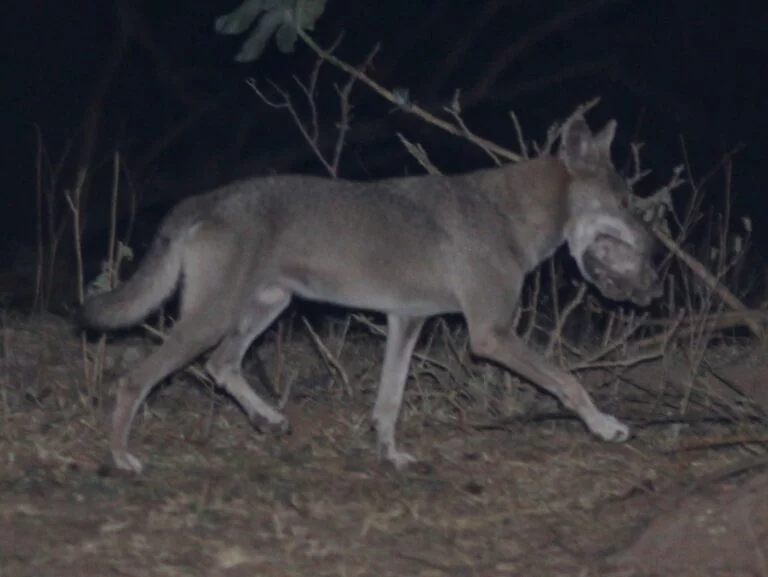
Shine a torch across a field at night and a wolf’s eyes throw the light straight back at you. It looks like a glow, but the light is only reflected. That small effect points to how a wolf’s eye is built, and it says a lot about how wolves handle the dark.
The US Fish and Wildlife Service says wolves have keen senses of smell, hearing and vision, which they use to detect prey and one another. Smell and hearing get most of the attention, and we have covered them in how wolves use smell and hearing to read the wild. This post looks at the third sense.
The mirror behind the retina
Wolves have a layer of reflective cells behind the retina called the tapetum lucidum. The Wolf Conservation Center explains that this layer improves night vision and also causes the eye shine we see after dark. Their eyes are not actually glowing. The light is just reflected.
The idea is simple. Light that enters the eye and passes the light-sensing cells without being caught gets a second chance when it bounces back off the layer. Wikipedia’s entry on the tapetum lucidum describes it as a retroreflector that sends light directly back along the light path. In canids, it sits in the dorsal half of the back of the eye.
There is a trade in this design. The same Wikipedia entry notes that in cats, extra light scatter within the tapetum slightly compromises visual acuity in return for better night vision. I found no wolf-specific measurement of that cost, so treat it as a general feature of the structure rather than a measured wolf number.
The chemistry of the layer varies between species. The tapetum entry says dogs and ferrets use zinc, while cats use riboflavin and zinc. I found nothing that states which compound wolves use, so I will not guess. Dogs are the closest animal in that list, but a close relative is not the same as a measurement.
Rods, cones and the dark
The retina holds two kinds of light-sensing cell. The Wolf Conservation Center says rods are sensitive to light and detect brightness, which makes them good for seeing objects in low light. Cones work in bright light and contain different pigments that allow wolves to perceive color.
Put the mirror layer together with the mix of rods and cones and you get what the Center describes: wolves see much better than humans at night. For how the hunt itself plays out, see how wolves hunt as a team.
What colours does a wolf see?
Here the evidence is thinner than many web pages admit. Most pages say wolves see only blue, yellow and gray. The careful version is this: the best-known test was on dogs, not wolves. In 1989 Neitz, Geist and Jacobs tested three domestic dogs in behavioural experiments. As the PubMed abstract reports, they found two classes of cone pigment, with computed peaks at about 429 and 555 nanometres, and concluded that dogs have dichromatic color vision.
Wolves and dogs are close relatives, so it is reasonable to expect a similar two-cone eye. It is also consistent with mammals in general. Wikipedia’s article on dichromacy says mammals are usually assumed to be dichromats, and that early mammals lost two of the four colour pigments of their vertebrate ancestor, due to the nocturnal bottleneck. Mammals as a group came through a night-active past.
So the honest summary is that a wolf probably sees a muted world with a limited colour range, but I did not find a direct colour test on wolves. If you have read one, tell us in the comments.
What this means for the pack
A wolf does not rely on one sense. Scent can tell it where prey passed, hearing can place a howl or a rustle, and sight can confirm a moving shape in poor light. In poor light, a reflective eye squeezes more from every bit of light.
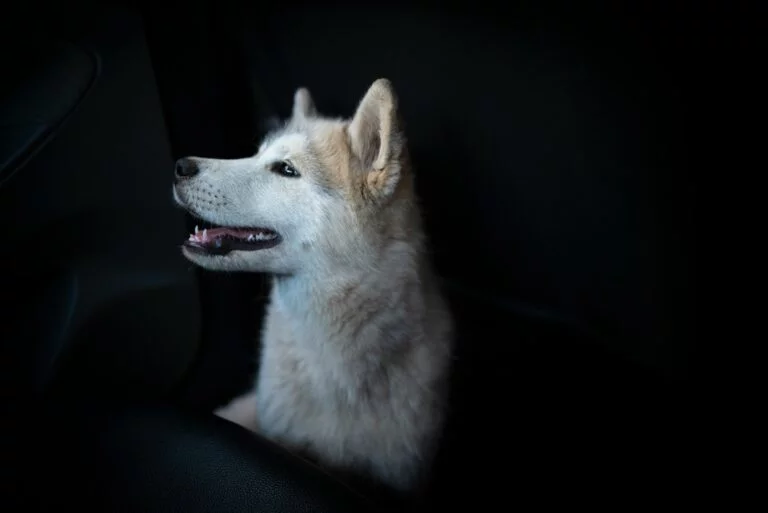
It also changes how we should read an eye-shine photograph. The glow is not a sign of anger or something supernatural. It is the tapetum doing its job. The same layer is why many animals, and the dog at the end of your torch beam, shine back at you. For another comparison of wolves and dogs, see wolf vs dog: which is stronger.
Wolf eyesight is a good example of a body built for a job. A reflective layer, a mix of rods and cones and a probably limited colour range all push the same way: see well when the light is poor.
Know something about how wolves see that we missed? Add it in the comments.