

Chernobyl Wolves: How Wild Animals Survive the Zone
5 min read
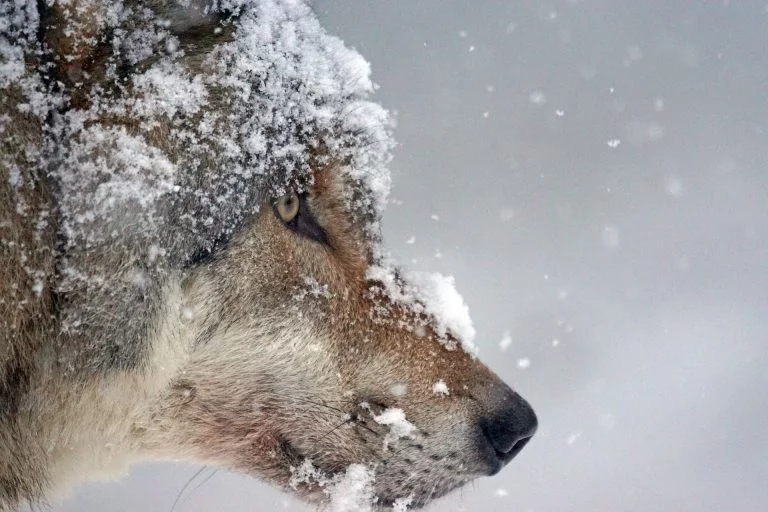
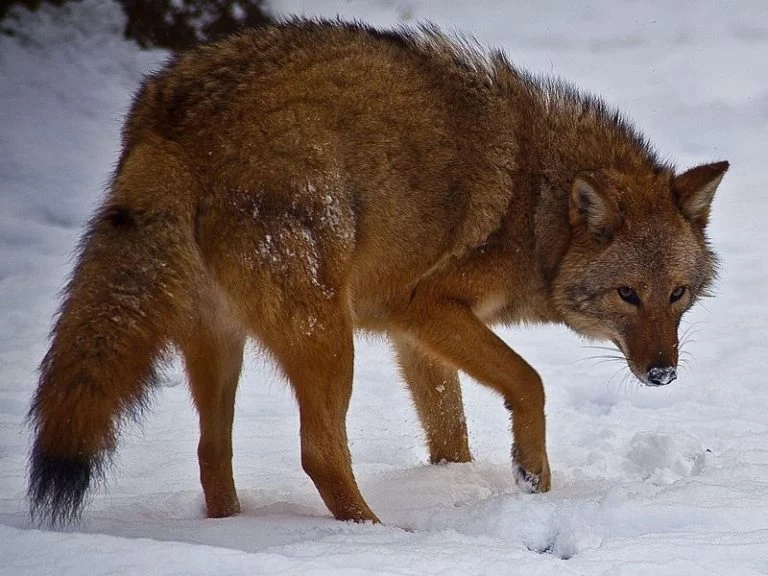
The 1986 Chernobyl disaster emptied about 4,700 square kilometres around the destroyed reactor: roughly 2,600 in Ukraine’s exclusion zone and about 2,160 in Belarus’s Polesie State Radioecological Reserve. People left and have stayed away. Wolves, brown bears, lynx, elk and wild boar moved in. Wolf density inside the zone now runs several times higher than in comparable protected areas outside it, and the wildlife appears broadly healthy, though specific effects of the contamination are documented and the science is still active.
The Chernobyl Exclusion Zone and its wildlife
The zone covers parts of both Ukraine and Belarus and has been off limits to permanent habitation since the evacuation. Large mammals began moving into the abandoned villages, farms and forest mosaic within a few years, and the recolonisation has continued ever since.
The reference study is Deryabina and colleagues, published in Current Biology in 2015, which used long-term track-count census data from the Belarusian portion of the zone. It found wolf abundance roughly seven times higher than in four uncontaminated nature reserves used for comparison, with elk, roe deer and wild boar also at or above the levels seen in those reserves. The paper’s conclusion was blunt: for these species, the absence of people outweighs the radiation.
Are the wolves radioactive?
In the literal sense, yes. Wolves in the zone carry measurable caesium 137 in muscle tissue, accumulated from the herbivores they eat. Burdens vary widely by location, with hotspots near the most contaminated soils. The dose the wolves themselves receive is nonetheless too low to produce effects visible at the population level.
Work on the genomes of Chernobyl wolves by Cara Love, an evolutionary biologist and ecotoxicologist at Princeton, was presented at a scientific meeting in January 2024 and picked up widely by the press. The reported finding was regions of the genome showing signs of selection that overlap with cancer-related pathways. That is a long way from the headline that circulated, which was that Chernobyl wolves have evolved cancer resistance. The peer-reviewed paper appeared in Molecular Ecology in April 2026. It reports signs of radiation stress and of possible selection on 15 genes linked to DNA repair and anti-tumour immunity, and its authors call the findings preliminary. It does not show that the wolves resist cancer.
How many wolves are in the zone?
Nobody has a precise figure, and estimates published over the last two decades have ranged from around 100 to several hundred animals depending on which part of the zone was surveyed and how. The finding that has held up is the relative one: wolf density inside the zone is several times what it is in comparable protected land outside.
Pack structure follows normal eastern European patterns. Family packs, large territories, and young wolves dispersing outward, which means the zone is a source population feeding wolves into the surrounding parts of Belarus and Ukraine rather than a sealed island.
What the wolves are eating
Elk (Alces alces) and red deer (Cervus elaphus) are the largest prey available. Wild boar and roe deer make up the medium tier, with hare, beaver and rodents below that. There are no livestock, because there are no farmers. The diet is ordinary eastern European wolf diet, simply at higher prey densities than the surrounding countryside supports.
Wild boar in particular have done well in the absence of hunting pressure, and that abundance is what carries the wolf density.
Other wildlife in the zone
Brown bears were confirmed in the Ukrainian portion of the zone in 2014, the first records in the area for around a century. Eurasian lynx are present and increasing. European bison were introduced into the Belarusian portion in 1996 and Przewalski’s horses were released in the late 1990s, both of which now persist as free-living herds.
The amphibian work is the most interesting of the recent findings. Pablo Burraco and German Orizaola documented that eastern tree frogs (Hyla orientalis) inside the zone are markedly darker than frogs outside it, publishing in Evolutionary Applications in 2022, and interpreted the extra melanin as a plausible protective response to ionising radiation. Their earlier 2021 paper in Scientific Reports assessed the actual radiation exposure of the same frogs.
What this tells us about wildlife and humans
Chernobyl now sits alongside other accidentally depopulated landscapes as a natural experiment. The Korean Demilitarised Zone shows a comparable pattern, and wildlife in the Fukushima evacuation area has followed a similar trajectory, with wild boar, raccoon dog and macaque populations expanding into abandoned settlements.
None of this makes radiation good for animals. It means that chronic low to moderate contamination is a smaller pressure on large mammal populations than farming, hunting and daily human disturbance are. That is a statement about how heavy our ordinary footprint is, not about how light the radiation is.
Visiting the zone
The Ukrainian portion ran controlled tourism with licensed guides, dosimeters and fixed routes for about a decade until the Russian invasion in February 2022 closed it. The Belarusian portion, the Polesie State Radioecological Reserve, began taking small tour groups in late 2018, always escorted by reserve staff, and also hosts accredited research.
Wolf sightings were never part of the offer even when tours were running. The wolves avoid the handful of places people go, and almost everything known about them comes from camera traps, track counts and scat genetics rather than from anyone watching them.
Mutations, myths, and the realistic picture
There is no evidence of visible mutation in Chernobyl wolves. They look like eastern European gray wolves because that is what they are. Body size, coat, pack structure and breeding all sit within the normal range. The two-headed Chernobyl wolf and its relatives are internet inventions.
The real picture is less cinematic and harder to pin down. Radiation effects in the zone are highly uneven, hotspots behave very differently from cleaner sections, and researchers studying mutation rates in Chernobyl wildlife have disagreed sharply with each other over methods and reproducibility. What is not in dispute is that a large predator population has established itself and is sustaining itself in a landscape people had written off.
Related reading on welovewolves
- Gray wolf species profile
- Who will save the Russian wolves?
- Wolf pack mentality
- Wolves return to Denmark
- Who is afraid of the German wolves?
- Wolf tourism worldwide
Sources
- Deryabina et al, Long-term census data reveal abundant wildlife populations at Chernobyl, Current Biology, 2015
- Burraco and Orizaola, Ionizing radiation and melanism in Chornobyl tree frogs, Evolutionary Applications, 2022
- Burraco, Car, Bonzom and Orizaola, Assessment of exposure to ionizing radiation in Chernobyl tree frogs, Scientific Reports, 2021
- Love and colleagues, Signatures of radiation-induced stress and putative selection on immune targets in Chornobyl wolves, Molecular Ecology, 2026
- IAEA Chernobyl information
- IUCN Red List, gray wolf
Frequently asked questions
Are Chernobyl wolves really radioactive?
Technically yes. They carry measurable caesium 137 picked up through their prey. The dose to the wolves is too low to show up as population-level harm, and they are breeding normally.
How many wolves live in the Chernobyl Exclusion Zone?
There is no reliable total. The measurement that has held up across studies is relative density, which runs several times higher inside the zone than in comparable reserves outside it.
Have Chernobyl wolves mutated?
Not visibly, and there are no two-headed wolves. Genome work presented in 2024 and published in 2026 reported signs of selection on immune and anti-tumour genes, which is a much weaker and more interesting claim than the evolved-cancer-resistance headline it produced.
Are Chernobyl wolves dangerous to humans?
There are no documented attacks. They avoid the few places people go. Ordinary wildlife guidance applies and there is no special radiation risk from seeing one at a distance.
Why is Chernobyl wildlife thriving?
Because nobody lives there. Hunting, farming and daily disturbance press harder on large mammal populations than the residual contamination does.
Can I visit the Chernobyl Exclusion Zone?
Not the Ukrainian portion, where tourism stopped with the Russian invasion in February 2022. The Belarusian reserve has offered small tours escorted by its own staff since late 2018; check that they are running before you plan a trip.
Updated 8 October 2026: corrected the size of the exclusion zone, added the 2026 peer-reviewed wolf genome paper, and corrected the line on tours of the Belarusian reserve.



a 2015 count found wolves several times more common in the zone than in nearby reserves. people leaving seems to matter more than the radiation.
they do well there because people left. says a lot about us.
Strange that one of the worst disasters of the last century turned into a wildlife refuge.
Individual animals still pay a price, I’d assume. The population doing well doesn’t mean every wolf is fine.