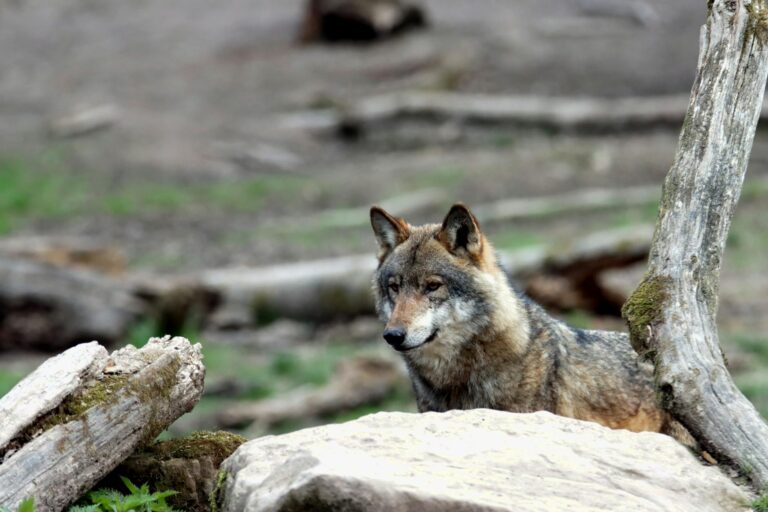
Wolves and Climate Change: What the Research Shows
2 min read
Wolves are not thermally fragile. They live from the Sonoran desert to northern Greenland and cope with a temperature span almost no other large carnivore manages. Climate change reaches them through what they eat, what kills them, and where the ground under their prey is going.
Part of our guide: Wolf Conservation.
The Arctic squeeze
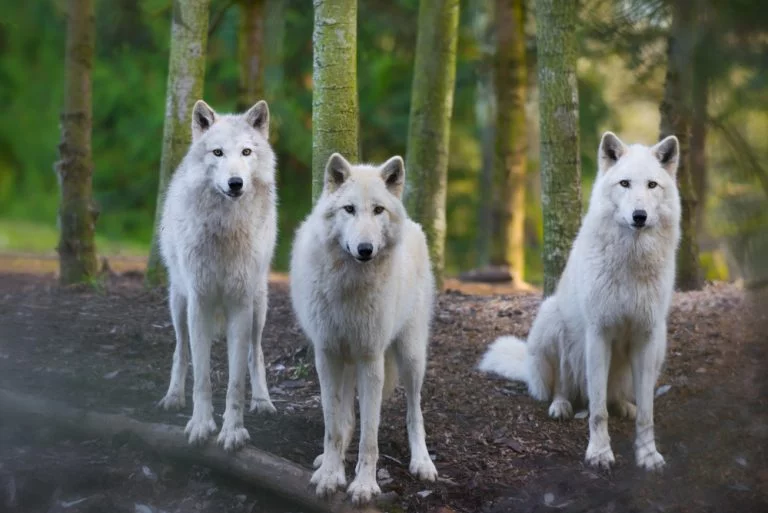
Arctic wolves on Ellesmere Island and in northern Greenland live on muskox and Arctic hare, and both are exposed to a specific failure mode: rain falling on snow, then freezing, sealing the forage under ice. Muskox starve in those years. Wolves follow within a season. L. David Mech’s long-running work around Eureka on Ellesmere, running since 1986, documented exactly this chain, with the study pack repeatedly failing to raise pups in the years after prey crashes.
This is the clearest climate signal in wolf ecology anywhere: not heat, but a weather pattern that takes the food away.
Snow, and why wolves care about it
Deep snow is a wolf’s ally. Long-legged moose and elk sink and flounder; wolves, lighter and shorter in the leg, run on the crust. Warmer winters with thinner or patchier snow take that advantage away, and hunting success drops when conditions are marginal.
The complication is that more freeze-thaw cycles also produce more hard crust, which cuts both ways: good for a wolf running on top, brutal for an ungulate punching through it. The net effect varies by region and by year, and modelling produces gradients rather than a single answer.
Disease
Diseases held back by hard winters are moving north. Canine parvovirus is a serious pup killer and has hit Yellowstone packs. Heartworm and tick-borne infections are pushing into the upper US Midwest. Sarcoptic mange, caused by a burrowing mite rather than a tick, is endemic in several populations and hits hardest in cold weather, because a wolf that has scratched its coat off cannot thermoregulate.
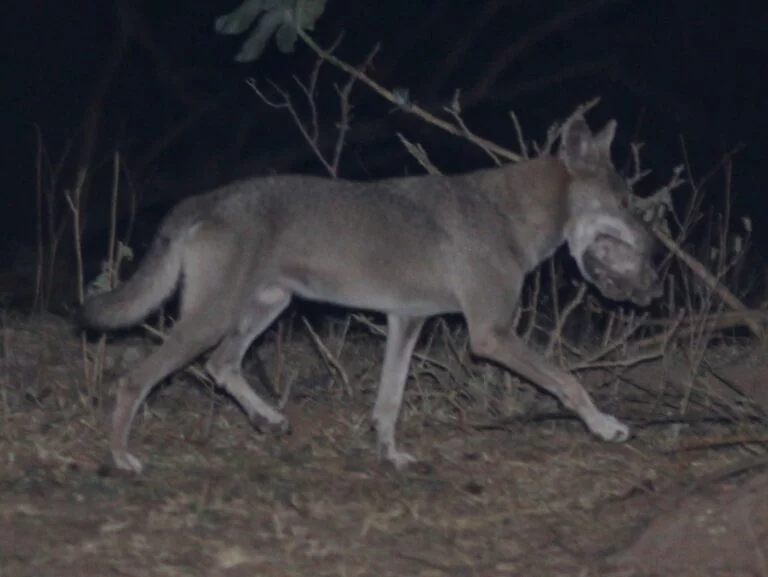
The Ethiopian wolf has the worst of it. Rabies and canine distemper from domestic dogs already drive its population crashes, and its only habitat, afroalpine grassland, shrinks as the treeline climbs. It is the one wolf where climate is a plausible extinction driver rather than a stressor.
The other direction
Some of this runs in wolves’ favour. Milder winters have made parts of former range in western Europe and the northeastern United States workable again. The European recovery since 1990 tracks legal protection much more closely than it tracks temperature, but warmer, more productive landscapes have not hurt.
Long-range forecasts split. Some models have wolves gaining ground at the northern edge; others have them losing it where prey collapses. Nobody has a credible net figure for global wolf numbers, and you should be suspicious of anyone who offers one.
Related reading
Wolf prints, mugs and apparel are in the We Love Wolves store.
Frequently asked questions
How does climate change affect wolves?
Indirectly. Temperature itself is not a problem for a species that lives from desert to high Arctic. Prey availability, snow conditions and disease are where it bites.
Are wolves endangered by climate change?
Specific populations are. The Ethiopian wolf faces a shrinking afroalpine habitat and heavy disease pressure. Some Arctic populations face prey collapse. Gray wolves globally are not.
Does snow help wolves?
Usually. Deep snow with a hard crust gives wolves a real advantage over long-legged prey. As snow becomes less predictable, that advantage varies year to year.
What actually helps?
Large connected habitat so populations can shift, protecting the prey base, and vaccinating domestic dogs near vulnerable wolf populations. The measures that help wolves now are the same ones that buffer them later.