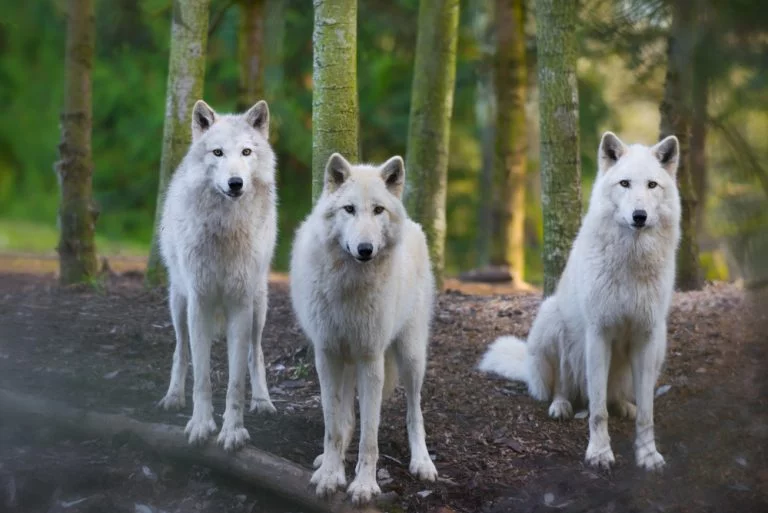
The Iberian Wolf: Spain and Portugal’s Comeback Story
4 min read
The Iberian wolf is the best recovery story in western Europe and, as of 2025, it is also a cautionary one. The population climbed from a few hundred animals in the 1970s to well over two thousand, won full protection in 2021, and lost part of that protection four years later.
Subspecies status
Angel Cabrera named the Iberian wolf Canis lupus signatus in 1907 on the strength of its markings: a darker coat than other European wolves, bold dark bands on the front legs, a dark line down the spine and dark patches on the lips and tail. Signatus means marked, and that is the whole argument for the name.
Males run roughly 30 to 40 kg and females roughly 25 to 35 kg, with a shoulder height of about 60 to 70 cm and a body length of 110 to 140 cm. That is mid-sized: smaller than a Mackenzie Valley wolf, in line with other Mediterranean populations. Long isolation in the peninsula has left the population genetically distinct from wolves further north and east.
Population history
Wolves once occupied the entire peninsula. Poisoned bait, bounties and habitat conversion pushed them back into the rural northwest, and by the 1970s the total was down to a few hundred animals.
Recovery came with rural depopulation, the abandonment of marginal farmland and legal protection under the EU Habitats Directive. A census around 2003 put the population near 2,000. The Large Carnivore Initiative for Europe puts the whole Iberian population at about 2,400 wolves for 2017 to 2022/23. In Spain the range is growing slowly at its eastern and southern edges.
Rural depopulation also let wild boar and roe deer numbers climb, which gave wolves wild prey, and compensation for verified livestock losses eased some of the conflict. For decades the law split the population at the Douro river. Under the EU Habitats Directive, Spanish wolves south of the river were strictly protected, while those to the north could be hunted under regional quotas.
The latest censuses
Spain’s national wolf census for 2021 to 2024, published by the environment ministry in June 2025, counted 333 packs, 12 percent more than the 297 packs of the 2012 to 2014 census. Most are in Castile and Leon, Galicia, Asturias and Cantabria. Portugal’s census for 2019 to 2021 found 58 packs and about 300 wolves (an estimate of 190 to 390), against 63 packs in 2002 to 2003, and the area its wolves occupy shrank by about a fifth over those two decades.
Protected in 2021, and partly unprotected in 2025
In 2021 Spain added the wolf to its list of species under special protection, which banned hunting nationwide for the first time, including in the northwestern regions where quota hunting had continued. Livestock interests in Castile and Leon and Asturias fought it hard.
They won, for a time. In March 2025 the Spanish Congress voted to take the wolf north of the Douro off the special protection list, through Ley 1/2025, in force from April 2025, and regional governments resumed culls. The courts have since pushed back. In February 2026 the Supreme Court annulled the part of Asturias’s wolf plan that set kill quotas, and in June 2026 Galicia’s high court suspended that region’s culls and asked the Constitutional Court to rule on the law. Portugal, where wolves have been protected since 1988, has not followed.
The Spanish reversal did not happen in isolation. European protection for wolves was downgraded at both the Bern Convention and EU level across 2024 and 2025, which changed what member states are permitted to do. Spain moved first and fastest.
Livestock conflict
Spain runs sheep and cattle at a scale that guarantees contact: millions of animals, much of it extensive grazing on exactly the ground wolves have recolonised. Regional governments pay compensation for confirmed kills, and the payment process is a recurring source of anger on its own, separate from the losses.
Mitigation is well established rather than experimental. Mastin Espanol guard dogs, electric fencing and bringing stock into corrals at night all reduce losses substantially where they are properly used. Uptake is patchy and varies by region, which is more of a limiting factor than effectiveness.
Where to see Iberian wolves
The Sierra de la Culebra in Zamora province is the most reliable place in Europe to try, with established operators and permanent observation hides. Picos de Europa in Asturias is the other Spanish option, and Peneda-Geres National Park covers northern Portugal.
Manage expectations. These are heavily persecuted animals in broken terrain, and most groups come away with tracks, scat and distant howling rather than a wolf in the scope. Hide-based operators do better than roadside spotting.
Frequently asked questions
What is the Iberian wolf? A subspecies of gray wolf, Canis lupus signatus, endemic to Spain and Portugal, distinguished by a darker coat, dark front-leg bands and a dark dorsal line.
How many are there? About 2,400 across Spain and Portugal in the LCIE assessment for 2017 to 2022/23. Spain’s 2021 to 2024 census counted 333 packs, and Portugal’s 2019 to 2021 census about 300 wolves in 58 packs. The population is many times its 1970s low.
Is Iberian wolf hunting legal? In Spain, a 2025 law allows culls north of the Douro again, but courts have blocked or limited them in Asturias and Galicia, and the Constitutional Court has been asked to rule. In Portugal, no. Wolves have been protected there since 1988.
Where can I see one? Sierra de la Culebra in Zamora is the best bet, followed by Picos de Europa and Peneda-Geres. Nowhere guarantees a sighting.
Are Iberian wolves different from Italian wolves? Yes. The Italian wolf, Canis lupus italicus, is a separate subspecies with its own long isolation history. Both are smaller and darker than northern European wolves.
Why did the population crash in the twentieth century? Poisoned bait and bounty hunting, sustained through the Franco era, plus habitat conversion and the loss of wild prey.
Updated 8 October 2026: replaced the population figures with Spain’s 2021 to 2024 census, Portugal’s 2019 to 2021 census and the LCIE estimate, corrected male weights, and added the 2026 court rulings on culls; merged our posts on the saving of the Iberian wolf and its current status into this guide, and added the Spanish and Portuguese census results.