
Want To Keep A Pet Wolf? Read This First
3 min read
A wolf cub is not a puppy with a better backstory, and almost everyone who tries this ends up handing the animal to a sanctuary. Many US states ban or tightly restrict owning, breeding or importing wolfdogs, several Canadian provinces do the same, and most European countries either ban them or license them tightly. Pure wolves are restricted harder still. Before any of that, though, there are practical reasons this goes wrong.
What you are actually taking on
Dogs and wolves separated somewhere between 20,000 and 40,000 years ago, and everything that has happened to dogs since has been selection for living alongside people. Deference, tolerance of handling, reading a human face, accepting a lead: none of that is background noise, it is the product of a very long process that wolves were never part of.
Raising a cub from days old does not substitute for that, whatever the films say about wolf imprinting. Hand-raised wolves at research centres bond genuinely with their handlers and still react to confinement and pressure like wolves. Environment does a lot. It does not do this. Our piece on whether you can train a wolf covers what handlers can and cannot teach one.
The cub-to-adult problem
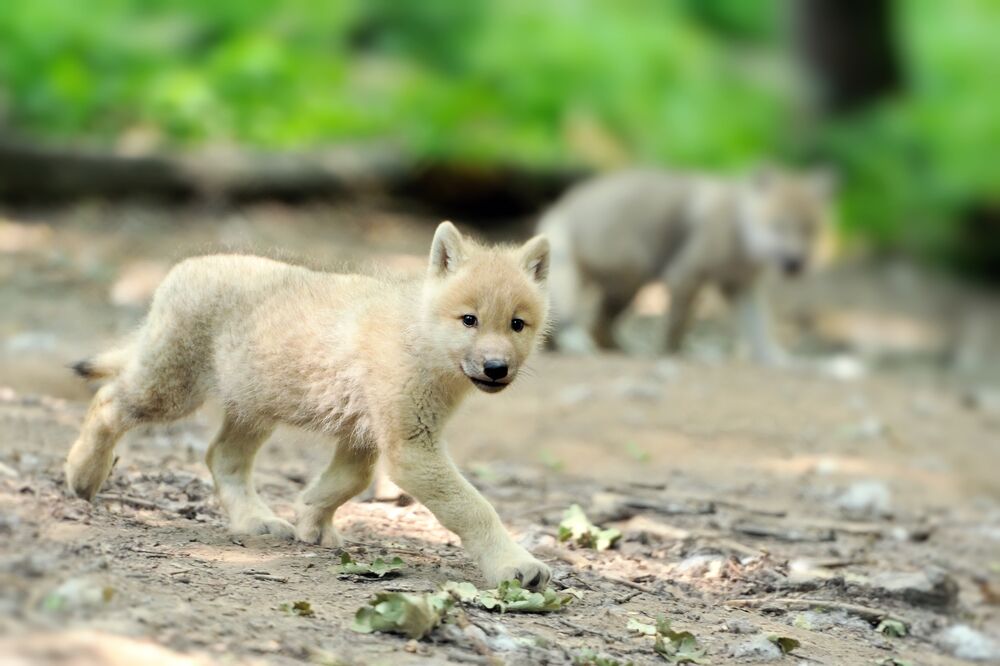
Cubs are wonderful and that is the trap. They are playful, affectionate and enormously appealing, and they stay that way for months. Then sexual maturity arrives, and with it territoriality, food guarding, prey drive and a very different relationship with the furniture and with any other animal in the house.
This catches out specialist facilities, not just amateurs. Wildlife centres that hand-rear cubs for conservation or breeding programmes plan around the change because they know it is coming. A family in a semi-detached house does not.
Space
Wild wolves cover ground constantly and their territories run to hundreds of square kilometres. Nobody is suggesting you need to replicate that, but the scale is the point: this is an animal built to travel, and a garden is not a small version of a territory, it is a different thing entirely. Accredited sanctuaries build enclosures measured in acres per animal, with dig-proof and climb-proof perimeter fencing, and they still treat enrichment as a daily job rather than an occasional kindness.
Wolves need other wolves
Packs are families and a wolf without one is a wolf missing most of its social life. Typical groups run to several animals and the interaction between them is more or less constant. Very few private owners can house one wolf properly. Almost none can house a group.
Ordinary wolf behaviour looks alarming in a living room
They howl, at length and often. They greet each other by taking a packmate’s muzzle gently in their jaws, which is affectionate between wolves and unnerving when directed at a person, and genuinely dangerous when directed at a child’s face. None of this is aggression. It is normal behaviour arriving in a setting that cannot absorb it, and it is the point at which many owners give up. The animal then goes to a sanctuary if it is fortunate, or spends its life on a chain if it is not.
The legal position
US rules vary by state: some ban wolfdogs outright, others require permits, and counties and cities often add rules of their own. In Canada, Alberta, Manitoba, Newfoundland and Labrador, and Prince Edward Island prohibit them outright. Most European countries have either banned them or attached serious licensing conditions. Australia does not permit them.
Note that most of these rules are written about wolfdogs. A pure wolf usually falls under dangerous wild animal legislation, which is a higher bar again, typically requiring inspection, insurance and enclosure standards written for zoos. Check your own jurisdiction rather than a general article, including any local authority rules that sit on top of national law.
So what should you do instead
If what you want is a wolf in your life, support a GFAS-accredited sanctuary, visit one that does not offer photo ops or wolf walks, or go and see wild wolves somewhere they can be seen. If what you want is a dog that looks like a wolf, several breeds will give you that without giving an animal a life it cannot cope with.
And if you have already taken one on and it is not working, contact a sanctuary early rather than late. They would much rather have the conversation before the situation becomes an emergency.
Bring wolves home
The We Love Wolves store carries books and clothing, which is a considerably better idea than the alternative discussed above.
- Shop wolf books
- Shop wolf clothing
Read more in our guide to wolves and dogs compared.
Updated 8 October 2026: corrected an overstated count of US states that ban wolfdogs.



Totally agree, Wild Animals belong in the Wild! If WildLife Imprints on a Human & lives or goes back to the Wild due to the Human not being able to handle it chances are other People can see it as a Threat if it comes to close to Humans & their Pets the most likely Law Inforcement will put the poor Animal Down:(,😥
I have to say that I have had a great wild wolf the gent was very much wanting to know my were about at all times.
the wild instincts come back. a wolf raised in your kitchen is still a wolf.
Agreed. Raising one by hand doesn’t switch the wolf off.
Pet wolf is two words that should never go together. The sanctuaries I’ve read about are full of animals people couldn’t handle once they grew up.
Cubs are the trap. Everyone falls for the puppy stage and nobody plans for the adult.