
10 Places To Visit Wolf Sanctuaries And Reserves Worldwide
5 min read
The wolf is one of the most persecuted mammals on Earth. Here are ten places around the world where you can visit wolves in sanctuaries and reserves that protect them.
Wolves have been hunted, poisoned and bountied out of large parts of their range, and some of them are gone for good. The Honshu wolf of Japan and the Pleistocene dire wolf survive only in museum cases. The conflict is not confined to one culture or one continent: from Africa to Europe to North America, superstition and livestock losses have kept the pressure on, and some governments still pay for dead wolves.
Against that, a lot of countries, organisations and individuals have decided to protect wolves instead. Sanctuaries and reserves are the practical way for most people to get near one without disturbing wild animals or putting themselves in the way of them. Here are ten worth knowing about, arranged by country and continent. For wild wolves, our guide to where to see wolves goes region by region.
Ten wolf sanctuaries and reserves worldwide
1) Ethiopia (Africa)
The Simien Mountains National Park is one of the last refuges of Africa’s most endangered carnivore, the Ethiopian wolf, also known as the Simien fox or Simien jackal. The IUCN lists the species as Endangered; the latest survey, from fieldwork in 2020 to 2021 published in 2024, counted about 454 adults in six isolated Afroalpine populations. Rabies and canine distemper carried by domestic dogs are the main killers.
Visit and you may also see gelada baboons and the walia ibex, which live nowhere else. The IUCN listed the ibex as Critically Endangered in 2026, after a December 2025 count found only 271.
2) India (Asia)
Kumbhalgarh Wildlife Sanctuary in Rajasthan is a good place to look for an Indian wolf, Canis lupus pallipes. In the hot months they concentrate around water, which makes them easier to find.
Worth knowing: almost the entire Indian wolf population lives outside protected areas, on farmland and scrub, which is why a sanctuary that actually holds packs matters so much.
3) Kazakhstan (Asia)
Kazakhstan is often described as holding the largest wolf population in the world, with figures of 90,000 to 100,000 quoted in the press. Treat that with caution. Official Kazakh game counts have reported figures closer to 15,000 in recent years, and other estimates land around 35,000. Nobody has a defensible national census, and the gap between the numbers is a story in itself: bounty hunting has continued for decades on the strength of the high figures.
Altyn Emel National Park is the main place to look, and you will also see Siberian ibex, gazelle, foxes and eagles.
4) France (Europe)
Les Loups de Chabrieres, near Gueret in the Creuse, was set up to educate the public about wolves and undo some of the damage done by centuries of folklore. Several packs of European gray wolves range over a large wooded enclosure, and there is a long glazed wall you can watch from without the animals reacting to you.
5) Germany (Europe)
Wolfspark Werner Freund, in the Kammerforst outside Merzig in Saarland, holds several packs in large landscaped enclosures and is free to walk around. It was founded in 1977 by Werner Freund, a former paratrooper who spent more than three decades living with and studying his wolves and became internationally known for it.
Freund died in February 2014 at the age of 80 and is buried in the forest cemetery a few hundred metres from the enclosures. The park carries his name and continues without him. Our piece on the two women managing German wolves profiles Tatjana Schneider, the assistant he named as his successor.
6) Romania (Europe)
Romania holds one of the largest wolf populations in Europe, concentrated in the Carpathian Mountains, where estimates run to a few thousand animals. The same forests hold brown bears and lynx, which makes the Carpathians the best place in Europe to see all three large carnivores in one landscape.
7) United Kingdom (Europe)
Wolf Watch UK sits on more than 100 acres of woodland on the Shropshire border with Wales. It is a non profit set up in 1993 to rescue and rehome wolves displaced from captivity across Europe, and it has taken in over 30 animals since. It is a sanctuary rather than a zoo, so access is limited and organised around the wolves rather than the visitors. Check their site before planning a trip.
8) Canada (North America)
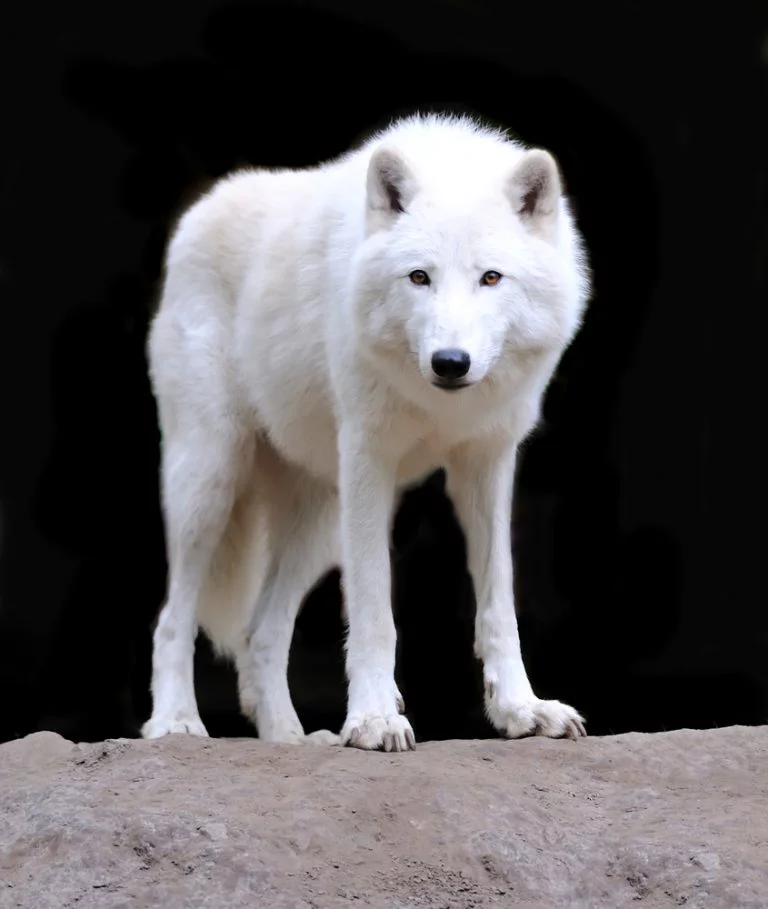
The BC Wildlife Park at Kamloops rescues and rehabilitates injured and orphaned local wildlife. Its resident animals include Arctic wolves born in captivity in Quebec, along with black and grizzly bears, lynx, cougars, birds of prey, badger, bison and elk.
The Haliburton Forest Wolf Centre in Ontario keeps a pack in a seven acre forested enclosure with an observation building, and is one of the few places anywhere set up specifically so people can watch wolves being wolves. It closes periodically for work on the site, so check before you drive.
9) United States (North America)
The International Wolf Center in Ely, Minnesota runs daily programmes and keeps an ambassador pack. Reservations are required for most of it.
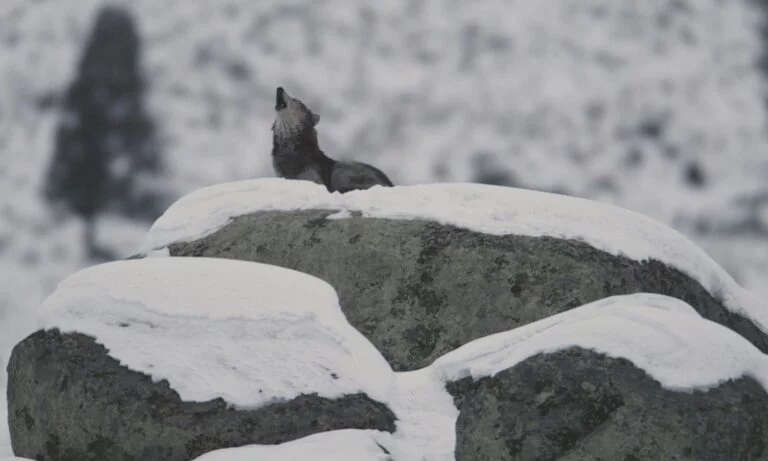
Yellowstone National Park is the wild option. Wolves were reintroduced in 1995 after being wiped out of the park, and the Lamar Valley in the northern range is the classic viewing spot. Winter is the best season: the animals are visible against snow and the elk are concentrated.
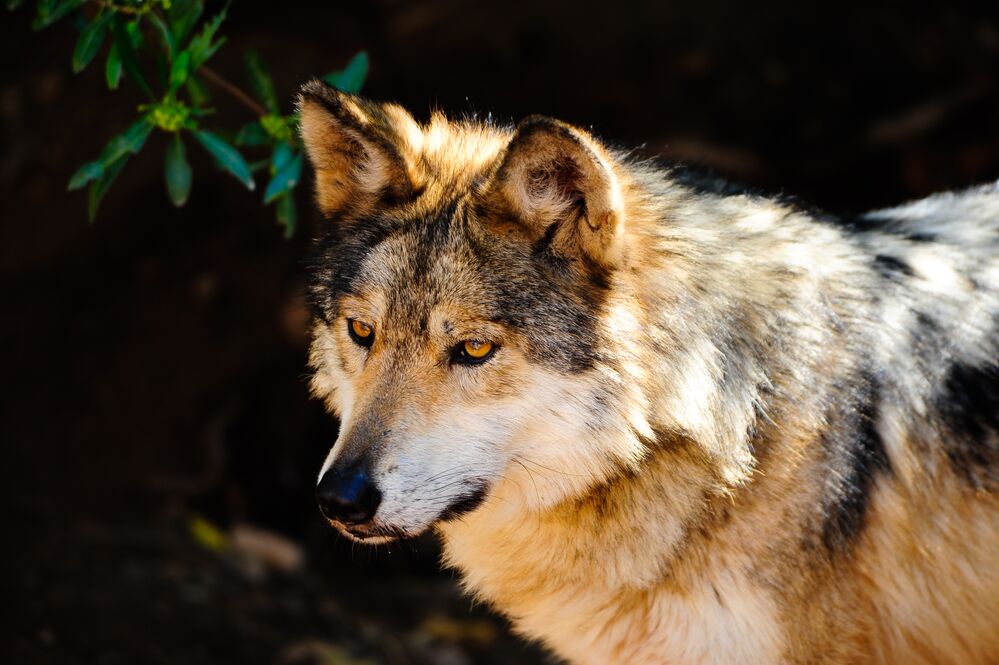
The Blue Range in the Gila and Apache National Forests, across Arizona and New Mexico, is the recovery area for the Mexican wolf. This one is a genuine success story in progress. The wild population was down to a handful of animals in the 1970s and was rebuilt from captive stock. The interagency count at the end of 2025 found a minimum of 319 wolves in the wild, up from 286 the year before, the tenth consecutive annual increase. Seeing one is still unlikely.
Denali National Park and Preserve in Alaska is one of the easier places in North America to see or hear a wild wolf, because packs use the park road corridor. Numbers are modest: in autumn 2025 the park counted 61 wolves in 10 packs in its study area, an estimated population of 66. Grizzlies, Dall sheep, moose and caribou share the ground.
10) Brazil (South America)
The maned wolf is not a true wolf at all: it is its own genus, Chrysocyon, a long legged omnivore of the cerrado grasslands. Serra da Canastra National Park in Minas Gerais is the classic place to look for one. The IUCN puts the global population at roughly 17,000 mature individuals, more than 90 percent of them in Brazil, and lists the species as Near Threatened.
Others worth a mention
Parc Alpha at Le Boreon and Les Loups du Gevaudan, both in France, and the Majella National Park in Italy are all worth the detour. In North America, the Northern Lights Wildlife Wolf Centre in Golden, British Columbia and the Wolf Conservation Center at South Salem, New York both do serious education and, in the latter case, captive breeding for the Mexican wolf and red wolf recovery programmes. Wolf Connection, a wolf and wolfdog rescue north of Los Angeles, runs public sanctuary walks alongside its wolf therapy programmes. Teachers will find the free classroom material from these centres listed in our wolf education resources.
Bring wolves home
Love what you read? Browse our wolf merchandise store for gear inspired by these incredible animals:
These places vary enormously, from small private rescues to national parks the size of small countries, and they do not all agree with each other about what good wolf keeping looks like. Read our guide to the difference between wolf sanctuaries and wildlife parks before you book anything, and see Wolf Conservation: Where We Are and What is Working for the wider picture.
Know a sanctuary we have missed, or have you visited one of these recently? Leave a comment and tell us how it was.
Updated 8 October 2026: updated the Ethiopian wolf, walia ibex and Denali wolf figures, corrected Wolf Watch UK’s founding year and Haliburton’s enclosure size, and removed an unsourced Kumbhalgarh count.


Did the Algonquin wolf howl one August. You can’t book it, you just turn up when the park announces it. The wolves answered on our second try.
bale mountains is supposed to be the best place to see ethiopian wolves. high altitude, so take it slow.
Going with a local guide made all the difference for us.
Kumbhalgarh was hit or miss for us. One wolf in three trips. The local drivers know the timing best.