
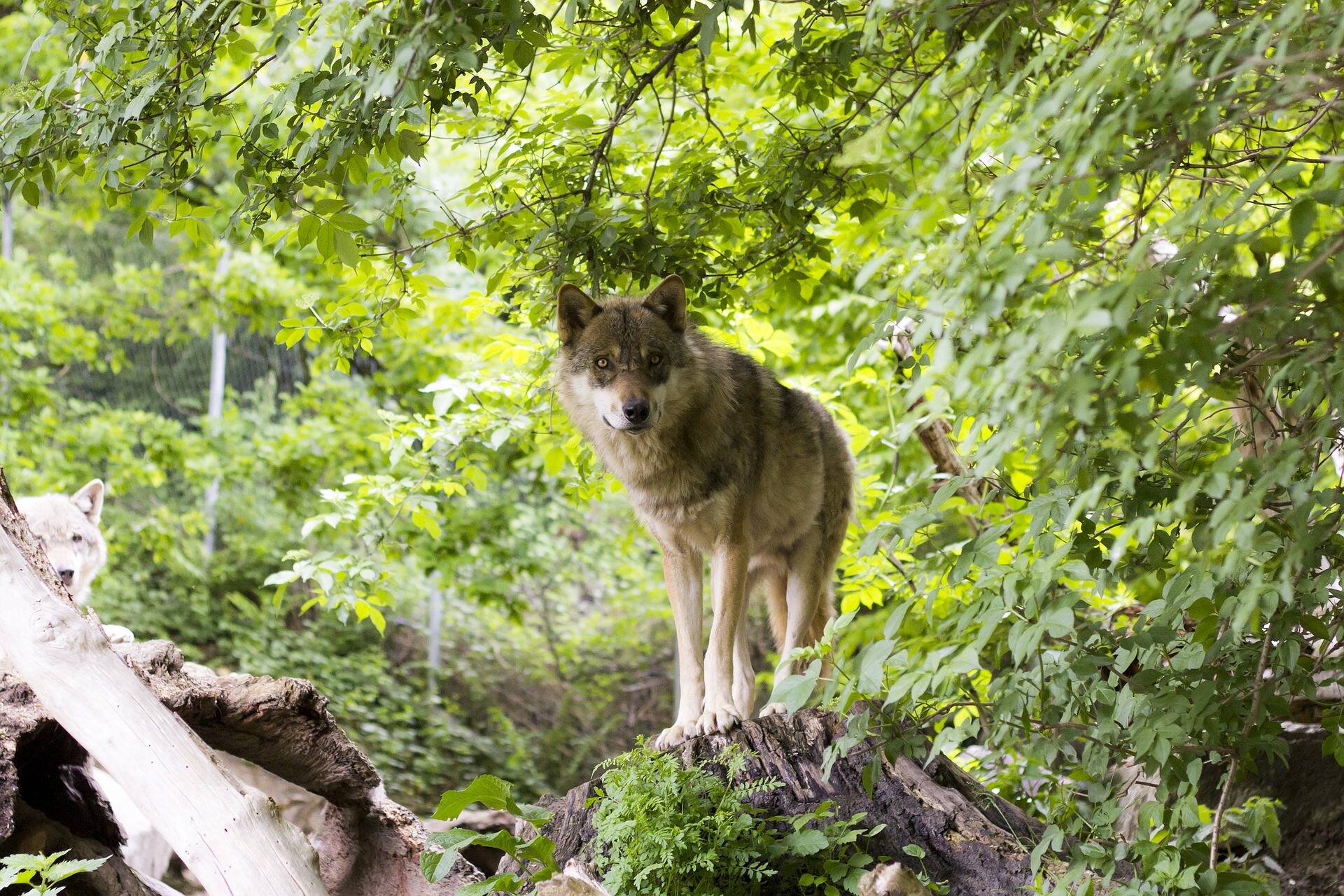
EU President’s Pony is Killed by a Wolf
3 min read
In September 2022 a wolf killed one elderly pony in northern Germany. The pony belonged to Ursula von der Leyen, President of the European Commission, and within three years the wolf’s legal protection across the whole of Europe had been loosened. Those two facts are connected, and the connection is worth looking at properly.
Why one pony mattered so much
Dolly was thirty years old and grazing on the family’s land near Hanover, where von der Leyen has long kept horses. As a private loss it was ordinary. As a political event it was not, because of who owned her.
A year later, in September 2023, the Commission she leads said that wolf packs in some European regions had become “a real danger for livestock and potentially also for humans”, and opened a review of the wolf’s strict protected status. She was pushing at a door that was already ajar. Farming and hunting organisations across France, Germany, Austria and the Alpine states had been making the same case for years without getting anywhere near the top of the Commission’s agenda.
The recovery behind the argument
Europe’s wolf comeback is real. Wolves were hunted out of most of Western Europe between roughly 1850 and 1950, and the Bern Convention listed them as strictly protected in 1979. Since then they have come back through recolonisation rather than reintroduction: Italian wolves into France in 1992 and onward into Switzerland, Polish wolves into Germany, which had its first breeding pair in 2000 and 157 packs by the 2020 to 2021 monitoring year.
The livestock conflict that recovery brings is real too, and it is concentrated rather than spread evenly. France counted about 12,500 farm animals killed in wolf attacks in 2018, most of them in the Alps, from a population of around 500 wolves. If you are a shepherd in the Alps, continent wide averages are not much comfort.
On human safety the picture is different. A Norwegian Institute for Nature Research review counted 489 wolf attacks on people worldwide between 2002 and 2020, with 26 deaths, the great majority outside Europe and most of them involving rabid animals. Italy, with about 3,300 wolves in its 2020 to 2021 survey, recorded a rare case in 2023: a female wolf bit several people on the Abruzzo coast near Vasto, and ISPRA’s genetic tests confirmed she was a wild Italian wolf.
What happened next
The push von der Leyen called for did not fade out. In December 2024 the Standing Committee of the Bern Convention voted to move the wolf from strictly protected to protected, the first time the convention had downgraded a large carnivore. The European Union followed in 2025 by amending the Habitats Directive to match.
The downgrade does not strip wolves of protection. Member states still have to keep populations at a favourable conservation status and still have to monitor them, and any state that wants to keep wolves strictly protected inside its own borders can do so. What it does is widen the room governments have to authorise culling, which is what conservation organisations objected to: in regions where wolves are only just re establishing, a legal cull can undo a decade of recovery quite quickly.
The alternative that keeps getting skipped
The case against culling is not sentimental, it is practical. Killing wolves in a territory empties the territory, and an empty territory next to a growing population does not stay empty. The measures that actually reduce losses year on year are unglamorous:
- Livestock guardian dogs, with funding and training to go with them.
- Electric fencing and night penning for vulnerable flocks.
- Shepherd support and range riding in active wolf country.
- Prompt and full compensation when a kill is verified.
Compensation matters most for the reason it is least discussed. It takes the financial injury out of the incident, and a farmer who has been made whole is a great deal less likely to spend the next year campaigning for a kill order.
A reference point worth keeping
Wolves had been killing livestock across Europe for decades without moving Brussels. What moved Brussels was one pony belonging to the most powerful official in the Union. That does not make the underlying concerns invalid. It is a reminder that policy tends to shift on the most visible loss rather than the largest one.
A note on our sources
Read more on our complete guide: Wolf Conservation: Where We Are and What is Working.
Updated 8 October 2026: corrected the wolf attack figures to the 2021 NINA report, the French livestock loss figure, the timing of the Commission’s statement, and the record of wolf attacks in Italy.




One pony shouldn’t decide wolf policy for a whole continent. Though I doubt that’s the whole story.
german monitoring is impressive. they could tell exactly which wolf it was.
Big growth from a very low starting point. That’s recovery, not an invasion.
The Bern Convention came in when wolves were at their lowest. Now the recovery itself is being used to argue for less protection.
Blaming wolves for fewer hunters seems a stretch.