

Are There Wolves In New York?
3 min read
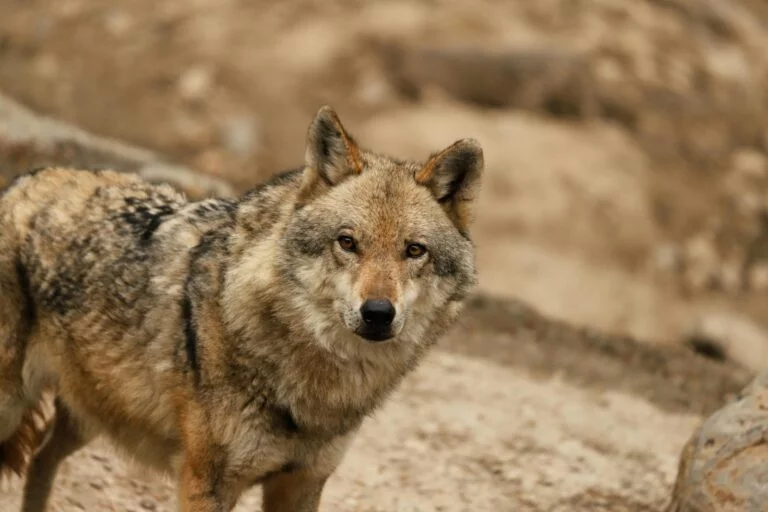
Are there wolves in New York? Sometimes, individually, and not by anyone’s design. In December 2021 a hunter in Otsego County, near Cooperstown, shot what he took to be an unusually large coyote. It weighed 84 pounds. The photograph he posted started an argument that ran for more than a year.
The Cooperstown animal
Eighty four pounds is far outside normal coyote weight, and the animal had the broad head, heavy chest and large feet of something else. Joseph Butera of the Northeast Ecological Recovery Society tracked down the hunter and arranged for a tissue sample to go for independent testing at the Natural Resources DNA Profiling and Forensic Centre at Trent University in Peterborough, Ontario.
The result came back overwhelmingly wolf, with ancestry drawn from Great Lakes, Northwest Territories and eastern wolf populations. Not a coyote, and not a wolfdog.
Why it was contested
The New York State Department of Environmental Conservation initially described the animal as a large coyote carrying some wolf and dog ancestry. Part of the reasoning was geographic: the St Lawrence River has long been treated as a barrier that dispersing Canadian wolves would not cross.
Conservation groups pushed back on both points, noting that large wolf like canids have turned up south of the St Lawrence more than once since the 1990s. The state’s position later shifted. In 2022, after reviewing further DNA results, DEC concluded the animal was most likely a male wolf from the Great Lakes population, while saying its origin was unknown. A peer-reviewed study led by the New York State Museum, published in Northeastern Naturalist in September 2025, answered more of that. The animal’s ancestry was almost entirely Great Lakes gray wolf, and isotope tests showed it had eaten wild prey all its life rather than pet food, which argues against an escaped captive.
Either way the legal point stands. The gray wolf is listed as endangered in New York State and killing one is illegal.
Wolf, coyote or something in between
The confusion is genuine, because the northeast has its own tangle of canids. The eastern coyote, often called a coywolf, is a hybrid: genetic studies find it mostly coyote, with smaller shares of wolf and domestic dog ancestry, and the exact split varies between studies. It is bigger and bolder than the western coyotes it descends from, and a 45 to 55 pound animal is entirely normal. An 84 pound animal is not.
- Weight: a gray wolf runs well over 60 pounds and often far more, an eastern coyote rarely tops 55.
- Tracks: a wolf print is broad, frequently over four inches long, and roughly double a coyote’s.
- Build: wolves have longer legs, a blockier muzzle and a much deeper chest.
- The only real test: DNA. Everything above is a probability, not a decision.
Could wolves live in New York again?
There is a source population to the north. Quebec and Ontario both hold wolves in the thousands, and dispersing young wolves routinely travel hundreds of kilometres looking for territory and a mate. A wolf reaching the Adirondacks is a long walk, not a fantasy.
The Adirondack Park covers roughly six million acres and would support wolves on habitat alone. The harder questions are whether enough animals could reach it to form breeding packs, and whether they would survive being mistaken for coyotes on the way. Confirmed individuals are not a population, and New York has confirmed individuals.
That is also the practical risk in every one of these cases. An endangered animal can be legally shot as a coyote and only identified afterwards, in a laboratory, months later.
Our full guide to wolf conservation covers where wolves stand across the rest of the United States.
Updated 8 October 2026: corrected the animal’s weight, added the 2022 DEC finding and the 2025 New York State Museum study, and corrected the eastern coyote ancestry figures; also corrected the publication date of the New York State Museum study.




Good that someone pushed to get the animal tested. Otherwise nobody would have known.
If the DNA says wolf, I don’t see why it keeps getting called a coyote hybrid. I’d like to hear the state’s reasoning.
The St Lawrence freezes in winter, so I don’t see it stopping wolves for long.
The Adirondacks have plenty of space and deer. Seems only a matter of time.